What other names does the Four Seasons Osmanthus have? An introduction to the alternative names of the Four Seasons Osmanthus
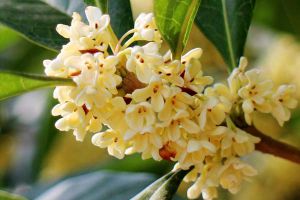
Morphological characteristics of the Four Seasons Osmanthus
The flowers of the Four Seasons Osmanthus are slightly white or pale yellow, with a fainter fragrance and thin leaves. It is a variety of Osmanthus in the genus Osmanthus. The biggest difference between the Four Seasons Osmanthus and other varieties is that it blooms in all four seasons of the year, so many people also call it Yueyue Gui. However, its fragrance is also the faintest among all osmanthus flowers, and the floral scent is almost imperceptible.
Four Seasons Osmanthus varieties are divided into Yueyue Gui, Siji Gui, Foding Zhu, Rixiang Gui and Tianxiang Taige.
Growth habits of the Four Seasons Osmanthus
The Four Seasons Osmanthus originates from the Mediterranean region. It has been introduced and cultivated in provinces such as Zhejiang, Jiangsu, Fujian, Taiwan, China, Sichuan and Yunnan in our country.
The Four Seasons Osmanthus prefers a warm and humid climate and has a certain degree of cold resistance, but it is not tolerant of severe cold. It likes light and also tolerates shade; during the seedling stage it needs a certain degree of shading. It has low requirements for soil and prefers slightly acidic soil on high, dry terrain rich in humus, especially deep, fertile, moist and well-drained sandy soil. It is not tolerant of arid and barren soil, and avoids saline-alkali soil and waterlogged land. Planting it in overly wet land with poor drainage will cause poor growth, root rot, leaf drop, and ultimately the death of the entire plant.
What values does the Four Seasons Osmanthus have
Osmanthus is one of the ten traditional famous flowers of our country. Because the common ones can only bloom once in autumn, the newly emerging "Four Seasons Osmanthus" has become a rising star in the osmanthus family. It breaks the conventional rule that ordinary osmanthus varieties bloom only once a year, and can bloom 4 times each year, with each seasonal flowering period usually lasting more than 20 days. The flowers it produces are dense, yellow-white in color, evenly distributed among the branches, and the fragrance is also relatively long-lasting, making people feel good. It can be used as a spice for brewing tea and making cakes and pastries.
The Four Seasons Osmanthus is often planted in gardens, along roadsides, on lawns and in courtyards, and is an excellent landscaping tree species. Because it has a certain resistance to harmful gases such as sulfur dioxide and hydrogen fluoride, it is also an excellent flowering plant for greening industrial and mining areas. It is also a great material for potted plants. After being made into a bonsai, it can be enjoyed for its shape, stone-like flowers and fragrance, truly achieving "three benefits in one". In addition, osmanthus wood is hard, glossy and beautifully grained, making it a good material for carving.