What other names does the Japanese late cherry blossom have? An introduction to common names
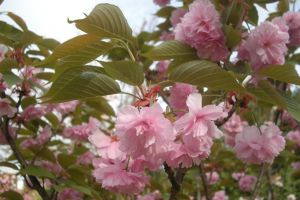
Introduction to the Japanese late cherry blossom
Cherry blossoms belong to shallow-rooted tree species and prefer sunny, deep, fertile, well-drained soil, with a certain degree of cold tolerance.
The Japanese late cherry blossom has large, fragrant flowers, and when in full bloom it is a mass of gorgeous blossoms. It has both the subtle fragrance of plum and the splendor of peach, making it an excellent variety among cherry blossoms.
Generally speaking, cherry blossoms are best planted in groups, most suitably in block-like mass plantings, with evergreen trees planted between the blocks as a foil. This not only fully brings out the ornamental effect of the cherry blossoms but also helps with the prevention and control of pests and diseases. Among Japanese late cherry blossoms, varieties with large, fragrant flowers as well as the four-season-blooming "Shikizakura" are all suitable for planting beside garden buildings or as solitary specimens; as for the "Oshima cherry" among late cherry blossoms, it is a good choice for coastal cities and industrial and mining cities.