A Detailed Guide to Sowing Times and Sowing Methods for Flower Seeds
What problems do you run into when growing flowers, and have all your questions been answered? If not, see below to find out whether the answer you are looking for is there.
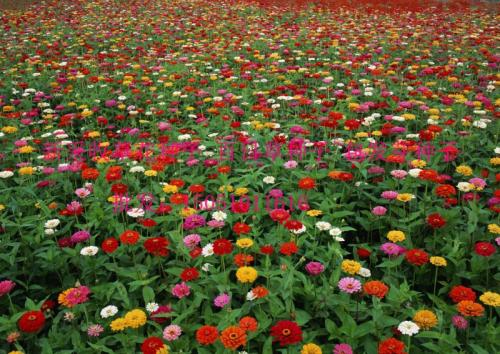
Q1. I know that growing flower seeds is divided by season, but I am not sure how to divide it? Is it like petunias being for the cooler season and rose moss being more heat-tolerant?(Also, may I ask: is wax begonia also heat-tolerant?)
A1. Yes, different seasons are suitable for sowing different kinds of flower seeds. Among the four kinds of seeds you picked, only rose moss is more suitable for sowing in spring and summer; the other kinds are still better sown in autumn (when the weather is cooler after Mid-Autumn).
Although wax begonia is also suitable for spring sowing, sowing it from autumn to winter still gives better growth and flowering.
For different seasons, the flower seeds we recommend for beginners to start sowing are as follows:
Spring sowing: sunflower, Madagascar periwinkle, zinnia, marigold.
Autumn sowing: cosmos, nasturtium, sweet alyssum.
Q2. For the first three kinds, I want to decorate the flower trough on the wall. I do not know whether strawflower is suitable for a flower trough?
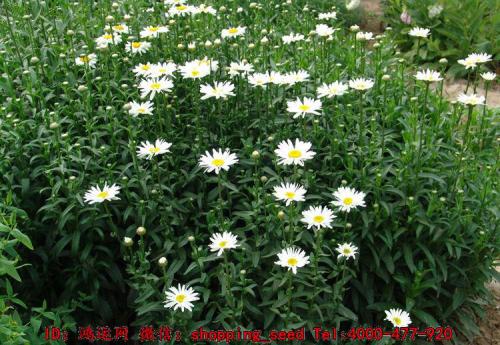
A2. The first three kinds of flowers are all suitable for planting in flower beds, but the strawflower Dreamland variety grows about 80-90 cm tall, so it is more suitable for planting in a low spot so that the flowers can be seen.
If you want to plan various flower seeds and decide where it is best to plant them, besides judging by flower shape, flower color and your own preference, you can refer to the "plant height" in the product description and then decide: should it be planted in a flower bed? Should it be used as a taller background flower? And other such questions.
Q3. I saw in the product description: the time needed to flower, some are short and some are long. So does that mean if rose moss is sown now (August), it will not flower until next year (from the website it says: sowing period: March-August, flowering period: May-October, calculate the months yourself)?
A3. The time from sowing to flowering really is different for each kind of flower, but it still depends on whether it is the suitable growing season.
For example, rose moss will not be sown now (late August) and flower next year; if it is sown in August, it will instead flower in October (before the weather turns cool); but if sown later than August, then the winter is cold, which is unfavorable for rose moss growth, and it will usually die; that is why it is recommended to sow rose moss in spring, waiting until next spring to sow, so the viewing period is longer.
Among the seeds you picked, only strawflower needs a longer growing period; petunia, wax begonia and rose moss can all flower within 3 months after sowing.
How long do flower seeds need before they flower? You can refer to the "sowing period, flowering period" in the product description; even for the same kind of flower, different varieties still need different times. Varieties usually noted as "early flowering" flower earlier after sowing.
Q4. How are flower seeds sown? After sowing, what are the light requirements? Do all flower seeds need high light during the growth and flowering period?
A4. For sowing general flower seeds, you can refer to the article "Sowing Fun - Five Steps to Easy Sowing".
The light requirement for sowing depends on whether different plant seeds are light-loving or light-avoiding. For details, see the article "How do you judge whether seeds need covering with soil and how deep?".
Among the varieties you like: petunia (Double Cascade), wax begonia (Queen), rose moss (Happy Hour), all three of the above are light-loving seeds; after sowing they do not need to be covered with soil, place them in bright indirect light, and after the cotyledons emerge move them to a spot with even more light.
After sowing strawflower, it can be covered with soil or not, but covering with soil is recommended because humidity is maintained better. After sowing, it does not matter whether it is placed in a bright spot or a dark spot, but once it sprouts it needs sufficient light, otherwise the seedlings will become leggy.
When sowing, if they are coated seeds and you do not know how to sow them, you can refer to the article "How to Sow Coated Seeds"; some flower friends ask us whether we sell palm-sized mini seeders. Actually, at the time we were mainly introducing that this product exists on the market, but based on our experience, sowing directly without relying on a machine is also OK!
Q5. If I buy one packet of seeds, I do not know how many flowers it will produce?
A5. The packaged quantity of each kind of seed is different, but for the amounts we repackage, we suggest buying one packet of each kind is enough (for general home garden cultivation there will still be some left). But to spread the risk, it is recommended to sow in batches. For example, for a packet of petunia with 50 seeds, you can first try sowing half, see how the subsequent seedling raising goes, and then decide whether to sow the other half.
Q6. After buying seeds, how long can they be stored? If after buying them you do not sow them quickly, how long can they be kept?
A6. The lifespan of each kind of seed is different, but it is recommended that seeds that have not all been sown or that are not yet to be sown be stored in the refrigerator, which can slow down seed aging. You can refer to this article "How should seeds that have not all been sown be stored?".
Seed germination rate is affected by freshness, so the seeds sold at the iGarden Hua Bao Ai Hua Yuan garden shop are mainly stocked in limited quantities for the current season; before shipping, we also use dedicated refrigerators to manage the stock, so it is still recommended to sow early at the suitable time this year.
After reading this, have you found the answers to all your questions? If you still have not found the answer you want to ask about, you can also search on this website, and you will surely find an answer you like.