What kind of growing environment does scarlet sage like
Other names for scarlet sage
Scarlet sage is a herbaceous plant, and has other names such as "firecracker red", "ivory red" and "Western red". Scarlet sage originates from Brazil in South America, and it is now widely planted in courtyards across most parts of China.
Morphological characteristics of scarlet sage
The scarlet sage plant can reach up to 90 cm in height, and its stem is a hairless, bluntly four-angled shape with shallow grooves.
The leaves of scarlet sage are (triangular) ovate, about 2.5-7 cm long and about 2-4.5 cm wide.
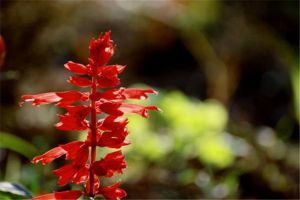
The corolla of scarlet sage is red and tubular, and the slender whorled verticillaster inflorescence generally bears 2-6 flowers; the flowers are also red, bright and numerous.
Growth habits of scarlet sage
Scarlet sage likes plenty of sunlight for its growth.
The most suitable growing soil for scarlet sage should be loose, well-drained and fertile; alkaline soil is relatively unfavorable for its growth.
Scarlet sage has poor cold resistance, and it is best to maintain a growing temperature of 20-25°C. Below 15°C the plant will stop growing, and below 10°C the leaves will turn yellow and fall off.
Value and uses of scarlet sage
Ornamental value: When scarlet sage blooms, it puts on masses of dense, brilliant red, which is very festive and especially suitable as a decoration during important festivals. It can also be grown as a potted plant at home to add a touch of "passionate" vitality.
Medicinal value: The whole scarlet sage plant can be harvested during its growing period and used as medicine, either dried or fresh. It has good effects of clearing heat, reducing swelling, cooling the blood and removing sores; applying mashed scarlet sage to boils can bring its effects into play.
The flower language of scarlet sage
Different colors of scarlet sage represent different meanings: red symbolizes a "heart in love"; white symbolizes "abundant energy"; and purple is a symbol of "wisdom".