What are the growth advantages of peonies? Learn it all in one article
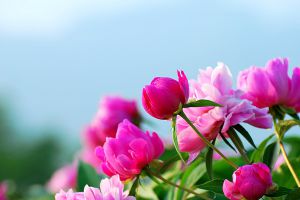
Other names for the peony
Peony, also known by other names such as Jiangli, Licao, Lanweichun, Yurong, Lishi, Moguhua, Heiqianyi, and Hongyao, is a famous herbaceous flower of the genus Paeonia in the family Paeoniaceae. The cultivation history of the peony in China exceeds4900years, making it one of the earliest cultivated flowers in China. It is also called the "Flower God of May," and because it has been regarded as the flower of love since ancient times, it is now honored as the representative flower of Qixi Festival.
The growing habits of the peony
The peony is a typical temperate plant. It likes warmth and tolerates cold, and has a relatively broad ecological adaptation range. Its cold tolerance is strong. In summer it prefers a cool climate, but it is also quite heat-tolerant. Even when the extreme maximum summer temperature reaches42.1°C, it can still safely pass through the summer. The peony can only grow lushly and produce vivid flowers when it has sufficient light during the growing period. The peony is a deep-rooted plant, so it requires deep soil layers. It also has thick, fleshy roots, so it is suitable for loose, well-drained sandy loam. It grows poorly in clay and sandy soil. High soil moisture content and poor drainage easily cause root rot. Neutral or slightly acidic soil is preferable, and saline-alkali land is not suitable for planting.
It grows better in fertile soil, but note that the nitrogen content must not be too high, to prevent excessive vegetative growth of branches and leaves. During the growing period, appropriate additional applications of phosphorus and potassium fertilizer can promote strong growth of branches and leaves and beautiful flowering. The peony prefers an environment with high, open terrain and relatively dry conditions, and does not need frequent irrigation. Because the peony has fleshy roots, it is especially intolerant of waterlogging. Standing water for6-10hours often leads to root rot. Low-lying and humid areas are not suitable as peony production regions in our country. Every flood is almost devastating to peonies. Only in high, open places were the peonies that were not submerged left behind.
The flower language of the peony
The flower language of the peony is "beautiful and moving," "reluctant to part, hard to separate." In ancient times, when men and women interacted, they gave peonies to each other to express a vow of love or the sorrow of parting, which is why it is also called "Jiangli Cao." Today, the peony has become the representative flower of Qixi Festival and is China's flower of love.
The rose of the West has thorns, while China's flower of love, the peony, is not only beautiful but can also heal illness. It reflects the virtues and character of the Chinese nation, like jade and like the peony: industrious, pragmatic, as light as peony fragrance, and as gentle and beautiful as jade. Pink peonies are like rosy clouds on the horizon, and also like a shy maiden in love. The romantic, reserved peony reddens the face of spring. The customs of the Shangsi Festival and the love song "give her a peony" have been passed down from the singing of the Book of Songs all the way to the Han, Tang, Ming, and Qing dynasties. In ancient China, the peony was always the melody of love, a romantic mountain song.