What kind of environment is suitable for morning glory to grow in
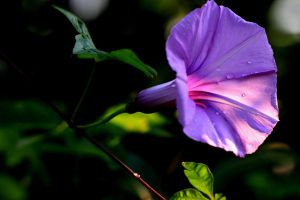
Alternative Names for Morning Glory
The alternative names of morning glory include Trumpet Flower, Qianniu, Morning Face Flower, Jinjiaolazi, Large Morning Glory, and Qin Niangzi. It is an annual twining herbaceous flowering plant in the genus Ipomoea of the family Convolvulaceae.
Growth Habits of Morning Glory
Morning glory prefers a mild climate, ample sunlight, and moderately ventilated conditions. It has strong adaptability to soil, is relatively tolerant of drought and saline-alkaline conditions, and is not afraid of high temperatures and summer heat. It is a deep-rooted plant, so when planted in the ground the soil should be deep. It is best to sow it directly or transplant the seedlings as early as possible. Large seedlings do not tolerate transplanting.
The Flower Language of Morning Glory
The flower language of morning glory is everlasting love, symbolizing love, calmness, and illusion.
Morning glory is the birthday flower of August 6. Its flower language is honor. You like to imitate the shrewdness and capability of adults, which makes you seem very interesting. You are very popular with the opposite sex, and you like to pursue the mature love of adults, but how can you, who are still inexperienced in the world, understand the world of adults? Just be more natural, and your heart will feel more at ease.
Variety Classification of Morning Glory
There are about 60 or more species of morning glory. The following three categories are commonly cultivated among large morning glories:
1. Ipomoea hederacea (ivy-leaved morning glory), with leaves deeply three-lobed, and medium-sized flowers borne 1 to 3 per leaf axil, in clear blue, rose red, or white.
2. Ipomoea purpurea (common morning glory), with broad heart-shaped leaves and entire margins, and small flowers in colors such as white, rose red, and clear blue.
3. Ipomoea nil (large-flowered morning glory), with large leaves and long petioles, three-lobed, with the central lobe relatively large, and leaves prone to developing irregular yellow-white patches. Flowers are borne 1 to 3 per leaf axil, the common peduncle is shorter than the petiole, and the flowers are large, with a flower diameter reaching 10 cm or more. It is native to tropical Asia and Africa. This species is most extensively cultivated in Japan, where it is called Morning Face Flower, and many horticultural varieties have been bred, with diverse flower shapes and rich, colorful flower colors, making it widely popular in many places.
Application Value of Morning Glory
1. Ornamental value: Morning glory is a common twining herbaceous flower of summer and autumn. It can be used for shade in small courtyards and in front of room windows, for beautifying small trellises and fences, and can also be planted as ground cover. As the saying goes: "Enjoy chrysanthemums in autumn, support plums in winter, plant crabapples in spring, and grow morning glories in summer." This shows that among the many flowers and plants of summer, morning glory can be considered a favorite. Morning glory has a common folk name, "Qin Niangzi" (Diligent Maiden); as the name suggests, it is a very diligent flower. Whenever the rooster has just crowed for the first time, the morning glory branches winding around fences and trellises open their trumpet-like flowers one after another. At dawn, people breathe in the fresh air while taking in the fresh flowers dotted among the green leaves, which truly has a special charm of its own.
2. Medicinal value: The seeds of Ipomoea purpurea can be used as medicine, known as Qianniuzi, Heichou, Baichou, Erchou, and Trumpet Flower. They can purge water and relieve constipation, eliminate phlegm and clear retained fluids, and kill parasites and break up accumulations. They are used for edema and distension, inability to pass urine and stool, accumulation of phlegm and retained fluids, qi counterflow with wheezing and coughing, parasitic accumulation with abdominal pain, and ascariasis and taeniasis.
Morning glory is edible and has effects such as purgation, diuresis, reduction of swelling, and expelling parasites. It is mainly used for conditions such as limb edema, nephritic edema, ascites due to cirrhosis, constipation, and parasitic accumulation with abdominal pain.
Selected Pictures of Morning Glory