What other names does the Silver Queen have? Let us learn about this plant
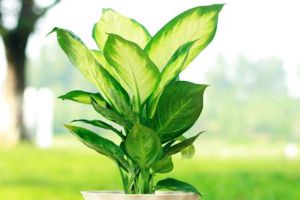
Other names of the Silver Queen
The Silver Queen, also known as Silver Queen Evergreen, Silver Queen Chinese Evergreen, and Silver Queen Aglaonema, is a foliage plant of the genus Aglaonema in the Araceae family. Its leaf color is beautiful and it is especially shade-tolerant. When potted to accent a hall or room, the effect is striking, especially bright and comfortable. At present, the Silver Queen is often used for cutting leaves as filler foliage in flower arrangements or as a potted plant to decorate indoor and outdoor environments.
Morphological characteristics of the Silver Queen
The Silver Queen is a perennial herbaceous plant, with a plant height of30-40cm, yellow roots, bean-sprout-shaped, very small. The stem is upright and unbranched, with obvious internodes. The leaves are alternate, with long petioles, the base enlarged into a sheath-like form, the leaves narrow and long, light green, with grayish-green stripes on the leaf surface, and a relatively large area. The unopened leaves are round and wrapped. Newly emerged leaves are light green, with gray in the middle and some light green speckles, and the underside is light green. Grown leaves are slightly darker in color. Newly grown leaves are about3cun, and once formed5、6cun.
Growth characteristics of the Silver Queen
The Silver Queen prefers a warm and humid climate and is not cold-tolerant. The suitable growth temperature is16-21 °C. Therefore, in summer, heat protection and cooling should be provided with attention to ventilation, and in winter it should be cultivated in a greenhouse or indoor structure, with the overwintering temperature10°C being suitable, and not lower than5°C; during the growing period, the Silver Queen needs sufficient water. In midsummer, spray water on the leaf surface every morning and evening, and place it in a semi-shaded spot. In winter, stem and leaf growth slows, so water should be controlled and the potting soil kept slightly dry. In late spring and early summer, a small amount of acidic nitrogen fertilizer can be applied; in summer, increase nitrogen fertilizer; in early and mid-autumn, some compound fertilizer can be applied; in late autumn and early winter, stop fertilizing. With sufficient fertilizer, the stems are thick and strong, there are many tillers, and the leaves are plump and large.
Uses of the Silver Queen
The Silver Queen is known for its unique air-purifying ability. The higher the concentration of pollutants in the air, the more it can exert its purifying ability, so it is very suitable for dark rooms with poor ventilation. The Silver Queen can remove nicotine and formaldehyde from the air. If there is a smoker in the home or it has just been renovated, consider placing a pot of Silver Queen to purify the indoor air; the Silver Queen also has high ornamental value. Its leaves are large and broad, and its form is beautiful and elegant. It can be placed in the living room, bedroom, balcony, kitchen, and other places, playing a role in decorating the home and improving the environment. In addition, the Silver Queen is toxic. After the stem of the Silver Queen is broken, it secretes a transparent liquid that is extremely spicy, more so than yellow lantern peppers, and the effect is long-lasting. When planting it at home, be sure to prevent children from breaking the stems and leaves to play with and lick them or put them in their mouths.