What other names does the violet go by? You may not know these names
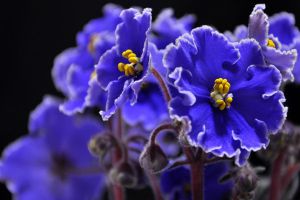
Other names for the violet
Violet, also called cao gui hua, si tao ke, and cao zi luo lan, is the collective name for the various species of plants under the genus Matthiola in the family Brassicaceae.
Morphological characteristics of the violet
The violet is a2biennial or perennial herbaceous flower, generally sown in autumn of the first year and flowering in spring of the following year, with a plant height of30~60cm, the whole plant covered with gray stellate pubescence, the stem upright and slightly woody at the base. The leaves are broad, oblong or oblanceolate, with rounded blunt tips. The raceme is terminal and axillary, the pedicels are thick and strong, and the flowers come in colors such as purplish red, pale red, pale yellow and white. Single-petaled flowers can set seed, while double-petaled flowers do not. The fruit is a cylindrical silique, and the seeds are winged. The flowering period is12~4month, and the fruit ripening period is6~7month.
Growing habits of the violet
The violet likes a cool climate and avoids dry heat. It likes a well-ventilated environment. In winter it likes a mild climate, but it can also tolerate a brief low temperature of-5°C. The suitable temperature for flower bud differentiation is15°C. It is not strict about soil, but grows better in well-drained, neutral to slightly alkaline soil, and avoids acidic soil. The violet is cold-resistant but not shade-tolerant, fears waterlogging, and is suitable for growing in a higher position with sunlight exposure and good ventilation and drainage. It must absolutely avoid muggy heat; in moldy rainy weather, when it is hot and poorly ventilated, it is prone to damage from pests and diseases. It requires fertile, moist and deep loam; it likes sufficient sunlight, but is also slightly tolerant of partial shade; fertilizer should not be applied too much, otherwise it is unfavorable for flowering; if light and ventilation are insufficient, it is prone to pests and diseases.
Varieties of the violet
There are many horticultural varieties of the violet, with two lines, single-petaled and double-petaled. The double-petaled line has high ornamental value; the single-petaled line can set seed, while the double-petaled line cannot. Generally, plants grown from flat seeds can usually produce a large number of double-petaled flowers; while plump, full seeds mostly produce plants with single-petaled flowers.
The main cultivated varieties of the violet include the white "Ida" (Aida), the pale yellow "Carmen"(Carmen), the red "Francesco"(Francesco), the purple "Abella"(Arabella)and the pale purplish red "Incana"(Incana), among others. According to plant height, there are three types: tall, medium and short; according to different flowering periods, there are summer violet, autumn violet and winter violet varieties; according to different cultivation habits, there are annual and biennial types.
Violet flower language
Violet(blue) - vigilance, loyalty, I will be forever loyal
Violet(white) - Let us seize the chance for happiness
Violet (purple)-Fall in love with you in a dream; to me you will always be so beautiful