Introduction to Baby's Breath: A comprehensive guide to this flowering plant
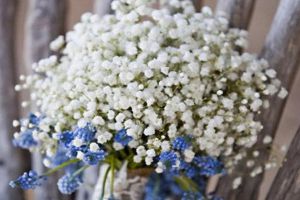
Other names for Baby's Breath
Baby's breath, originally named double-flowered gypsophila, also known as po tong qian, is native to the Mediterranean coast. It belongs to the Caryophyllaceae family and is a perennial herbaceous plant of the genus Gypsophila.
Growing habits of Baby's Breath
Baby's breath prefers a warm, humid environment with plenty of sunlight, is relatively shade-tolerant and cold-tolerant, and grows best in well-drained, fertile and loose loam soil. A slightly alkaline calcareous loam is best for the growing medium, with good drainage and sunlight required. When the plant height has already reached20cm or more, reduce the amount of watering accordingly; slight drought can promote flowering, and especially after flowering, poor drainage or prolonged rain will easily cause the roots to rot. It prefers warmth and dislikes high temperatures and excessive moisture; the optimum growing temperature is10-25℃。
Morphological characteristics of Baby's Breath
Baby's breath is an evergreen dwarf small shrub, with a plant height of about65-70cm, slender and smooth stems, very many branches, narrow and long leaves, sessile, opposite, and powdery green leaf color. Baby's breath resembles gypsophila, with flowers white to pale pink. Common ones include: Carmine, with deep rose-red flowers; Large White, with large white flowers; Rose Red, with pale rose-colored flowers. Flowers can be double or single.
Varieties of Baby's Breath⟧
Fairy: can also be cultivated in summer, blooms year-round, with pure white flowers.
Perfect: not tolerant of low-temperature weather, with relatively large, crystal-white flowers, suitable for corsages and dried flowers.
Diamond: a relatively short plant, vigorous and easy to grow, blooms in autumn, with pure white flowers.
Flamingo: slender stems and branches, blooms in spring, with pale red flowers.
Red Sea: thick stems, can bloom from spring to autumn, with peach-red flowers.
The flower language of Baby's Breath
The flower language of baby's breath is: purity, care, longing, supporting role, true love and a pure heart.
Using baby's breath as a filler material in flower arrangements can handle the relationships of weight, density, concealment and exposure, elevation and depression, distance and height in the arrangement, making the work more layered and deep, and fully showing a sense of three-dimensionality, haziness and fluffiness. For example, simply arranging a few rose branches can also show their beauty, but if a bunch of baby's breath is added, it can play an even stronger supporting role, making the theme and the accompanying elements blend harmoniously, with a fully integrated spirit, achieving a profound implication in which the substantial contains the ethereal and the ethereal contains even more substance. A poet described this scene as "red and green trees in every home, white and blue smoke everywhere." Just as the folk saying goes: "However good the peony is, it still needs the support of green leaves."
The uses of Baby's Breath
In early summer, baby's breath produces continuous small white flowers, with blooms that are abundant and delicate and evenly distributed. Like a sky full of stars, hazy and charming, and also like a tree covered with snow, clear and lovely, it is suitable for planting in flower beds, along roadsides and in flower hedges, and is also very suitable for potted display and bonsai making. Baby's breath is likewise an indispensable filler flower material in flower arrangements; inserting a few sprigs of baby's breath into a bouquet adds a touch of charm.
Baby's breath can be used as medicine; it is harvested in summer and autumn when the flowers and leaves are luxuriant, washed clean, and dried in the shade or used fresh. It can clear heat and promote urination, and resolve phlegm and relieve cough. It is used for acute icteric hepatitis, acute nephritis, whooping cough, urinary tract stones, athlete's foot, herpes zoster, conjunctivitis and erysipelas.