What makes the China aster so special? A detailed look at the China aster's characteristics
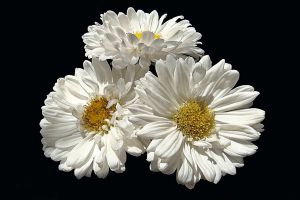
The family and genus of the China aster
The China aster is a herbaceous plant belonging to the genus Callistephus in the family Asteraceae.
Other names for the China aster
The China aster, also known as the annual aster, is also called Jiangxi la, July chrysanthemum, and Gesang flower.
The origin of the China aster
It is produced in Jilin, Liaoning, Hebei, Shanxi, Shandong, Yunnan, and Sichuan provinces in China. It grows on hillside wasteland, hillside grasslands, watersides, or shady open forests, at an altitude of 30-2700 m.
In Japan and Korea, there are widely cultivated and wild types, and botanical gardens in the Soviet Union and other European countries have introduced it for ornamental flower use.
The morphological characteristics of the China aster
Annual or biennial herb, about 30-100 cm tall. The stem is erect, solitary, with white rough hairs, and the base diameter is 6-7 mm.
The capitulum is solitary, 6-8 cm in diameter, with a hemispherical involucre. The flower colors are rich, including red, pale red, blue, yellow, or pale blue-purple.
The achene is long elliptic-obovate, relatively flat, and very easily shed. The flowering and fruiting period of the China aster is from May to October.