What other aliases does the money tree have? Many people don't know these names
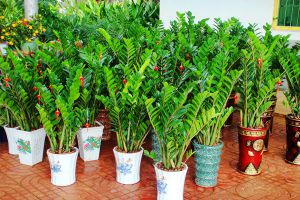
Morphological characteristics of the money tree
Deciduous shrub or small tree, 3-6 m tall, rarely up to 10 m; young branches grayish-green, hairless, old branches dark gray; buds cylindrical, 8-10 mm long, bud scales broadly lanceolate, about 5 mm long, about 1.5 mm wide, slightly red, with a small pointed tip at the apex, margins ciliate.
Flowering period May, fruiting period June-October.
Origin and distribution of the money tree
Native to northern and central China. Also distributed in Japan and Korea. At present, the Hunan Jiajun Landscape Goldenrain Tree Base, Jiangsu Goldenrain Tree Base, and Zhejiang Goldenrain Tree Base all carry out large-scale artificial cultivation.
Growth habits of the money tree
The money tree is a sun-loving tree species, likes light, and is slightly tolerant of partial shade; cold-tolerant (Huangshan goldenrain tree is less so); tolerant of drought and barren soil, and also tolerant of low humidity, saline-alkali land, and short-term waterlogging damage.
Deep-rooted, with strong roots and strong sprouting ability, moderate growth speed, slower when young, then gradually faster, widely adaptable, not demanding in soil requirements, able to grow in slightly acidic and alkaline soils, and prefers to grow in calcareous soil. Strong
wind resistance, can withstand low temperatures of minus 25°C, and has strong resistance to dust, sulfur dioxide, and ozone. Few pests and diseases, and easy cultivation and management.
Ornamental value of the money tree
The goldenrain tree grows especially fast and is used in considerable quantities in landscaping. It is an excellent tree species for street trees, afforestation plants, park greening, and residential community greening. Its greening effect is good, it shows results quickly, and its economic value is high.