What are the other names for Dendrobium nobile? So it can also be called this
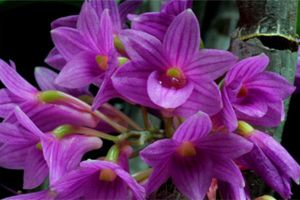
Other names for Dendrobium nobile
Red Dendrobium
Growth habits of Dendrobium nobile
Dendrobium nobile is a perennial herb that prefers cool, shady conditions. It thrives in warm, humid, semi-shaded environments with annual rainfall above 1000 mm, and grows best in subtropical deep mountain forests where the average January temperature is above 8°C. The suitable growing temperature is 15 to 28 degrees, and the suitable growing air humidity is above 60%. It is not very demanding regarding soil and fertilizer. In the wild, it mostly grows on loose, thick bark or tree trunks, and some also grow in rock crevices.
It has an aerial root system, and the main requirement is good root permeability. The substrate used should preferably be ventilated, breathable, and well-draining. Under suitable temperature and humidity, it grows quickly and has very strong survival ability. Every year in late spring and early summer, inflorescences emerge from the upper nodes of two-year-old stems. After flowering, new buds grow from the stem base and develop into stems, and in autumn and winter it enters a dormant period.
Main value of Dendrobium nobile
Its ornamental value is extremely high. The flowers are elegant, delicate and lovely, brightly colored, and fragrant. It is known as one of the "four great ornamental foreign flowers." It can be used as a cut flower or grown in pots for viewing. Having several pots at home makes it lively and festive. In addition, the flowers do not wither even 2-3 days after being cut, and their vigorous vitality is admirable.
Plants of this genus are considered "strong in character, loyal and amiable." In Western societies, people often present them to respected elders they admire. On June 19 each year, Dendrobium is given to fathers, and it is called the "Father's Day flower." It has the flower meaning "welcome, dear," and can be made into a boutonniere with Gerbera jamesonii and Eucalyptus rotundifolia and worn on the chest. In Europe and America, Dendrobium flowers are often made into boutonnieres, paired with Gypsophila paniculata and Asparagus fern, to express "welcome." To this day, they are widely used in large banquets, opening ribbon-cutting ceremonies, or to entertain distinguished guests.