How can Chinese hibiscus produce more flowers? This is how an experienced flower grower does it, simple and convenient
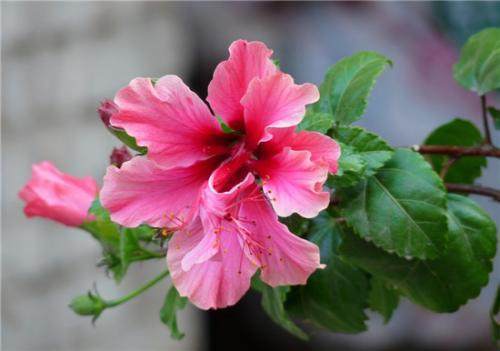
A few wisps of cold mist drift over the field paths, and before one knows it, autumn has arrived. The flowers on the balcony are bare, with hardly a few pots still blooming. Such is the way with flowers in the north: in spring, a hundred flowers vie in brilliance. Once summer has passed, it is mostly the turn of foliage plants to dominate, except for that one pot of red Chinese hibiscus that has not yet faded, and has even put out a few new shoots. The Chinese hibiscus, I know it well: its flowers are large and brilliantly colored, and its blooming period is long. Besides red, there are also pink, orange-yellow, yellow and many other varieties. In early April, I repotted it once. Chinese hibiscus likes slightly acidic soil, so I prepared a loose, fertile, sandy loam for it.
Considering that the Chinese hibiscus blooms profusely, I added a little phosphorus fertilizer at the bottom of the pot. To make the Chinese hibiscus grow into a handsome shape, encourage new shoots and produce even more vigorous growth, I specifically learned a trick from a flower grower. It is to cut back all the branches of the Chinese hibiscus, leaving 2-3 buds at the base of each and pruning off everything above. Of course, after pruning, be sure to control the amount of water and fertilizer. Now, looking at the Chinese hibiscus in the pot that has not yet withered, it has been worth a whole season of busy work.
To ensure the nutrient supply during the flowering period, the old flower grower taught me to apply, every 7 days, a thin, well-rotted cake fertilizer solution with a small amount of potassium dihydrogen phosphate added. The result is that I have been rewarded, time and again, with the scene of flowers blooming and falling and filling the sky. But once autumn begins, fertilizer should be applied a little less. Because too much fertilizer will trigger autumn shoots. Autumn shoot tissue is tender and weak in cold resistance; not only can it not withstand the cold current from Siberia, it will also suffer frost damage, so the loss outweighs the gain.
Do not be fooled by the Chinese hibiscus's outwardly bold and enthusiastic air; in fact, its flower heart is very delicate. In the Compendium of Materia Medica, it was once described as having "soft and slender branches and stems." It is clear that to grow this "soft and slender branched" Chinese hibiscus well, one cannot do it without putting in some effort. When it comes to how to grow Chinese hibiscus, sunlight is indispensable. The Chinese hibiscus is very strict about sunlight: every day it must get a full eight hours of sun before it will bloom properly. Basking in the sun is like the Chinese hibiscus's daily work, and it is almost never off duty all year round. If there is not enough sunlight, it will throw a little tantrum: either the flowers bloom smaller, or the buds gradually drop off, which is truly both amusing and exasperating. If it is an especially muggy and hot summer day, you can place the Chinese hibiscus in a spot with scattered light so it receives less concentrated sunlight and avoids sunburn.
With sufficient sunlight, the Chinese hibiscus can bloom happily. After that, you need to pay attention to some trivial care tasks. For example, the Chinese hibiscus likes water and fertilizer, so we should water it every day. On hot summer days, besides watering once in the morning and once in the evening, we should also sprinkle some water on its flowers and leaves from time to time to keep them moist. In addition, apply a thin fertilizer once a week to the Chinese hibiscus. During the growing season, fertilizer can be applied a little more often, but be sure not to choose fertilizer with a high concentration. After autumn and winter, gradually reduce the frequency of watering and fertilizing. At this time, just place it in a spot with good sunlight and good ventilation and give it a little care, but be careful to maintain the indoor temperature, keeping it between 5°C and 15°C as much as possible; otherwise, the Chinese hibiscus will not only find it hard to overwinter safely, but the flowering quality of the coming year will also be affected.