This wild vegetable can fight cancer, detoxify, aid weight loss, boost the brain and calm the nerves - too many benefits to count
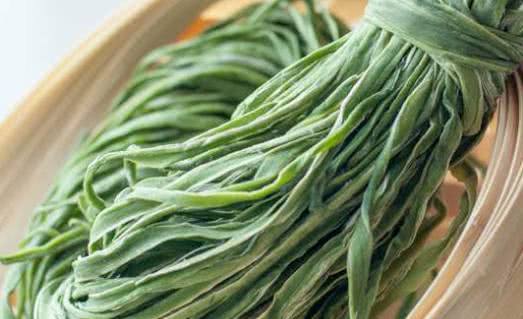
Tribute vegetable (gongcai) is an annual herbaceous plant with a bright green color, a crisp and refreshing texture, and a flavor resembling jellyfish, offering extremely high edible value. Its cultivation history spans more than 2,200 years, and it is a purely natural, green, premium dehydrated vegetable. During the reign of the Qianlong Emperor of the Qing Dynasty, it was presented as tribute to the imperial court, and thereafter it was offered as tribute every year, which is why it is called "tribute vegetable" (gongcai). Because it makes a sound when eaten, crisp and refreshing, in the 1960s Premier Zhou Enlai vividly called it "xiangcai" (crispy-sounding vegetable), and it is also known as "mountain jellyfish vegetable." It is a precious specialty of Yimen Town, Guoyang County, Bozhou City, Anhui Province. Its cultivation history dates back to the Qin Dynasty, and to this day Yimen has been designated by the state as "China's Home of Taigan." Taigan's current planting area has made it the largest taigan production and cultivation base in the country. The products are exported to Japan, South Korea, Singapore, Hong Kong, China, Macao, China, Taiwan, China and other countries and regions
In September 2006, the General Administration of Quality Supervision, Inspection and Quarantine approved geographical indication product protection for Guoyang Taigan. Pizhou Taigan is renowned far and wide and is one of Pizhou's bulk commodities sold throughout the country and to places such as Hong Kong, China. On January 8, 2013, Pizhou Taigan passed the technical review for geographical indication product protection by the General Administration of Quality Supervision, Inspection and Quarantine, becoming another geographical indication protected product after Pizhou white garlic and Pizhou ginkgo. The semi-finished gongcai taigan is also known as taigan, xiangcai, mountain jellyfish, and taicai. It has a bright green color, a crisp and refreshing texture, and a flavor resembling jellyfish, offering extremely high edible value. It belongs to the leafy green vegetables. In autumn, its stems are harvested, peeled, split into strips and sun-dried. Suining County has a history of cultivating taigan for more than 2,000 years. This product is a precious vegetable of the northern temperate zone, belonging to the Asteraceae family and the Lactuca genus, an annual herbaceous plant. It contains glutamic acid, vitamin C, vitamin D, zinc, iron, calcium, selenium and more, and has certain dietary therapeutic effects on human development, anti-aging and cancer prevention. It is an excellent dish for banquets and was honored as "tribute vegetable" during the reign of the Qianlong Emperor of the Qing Dynasty. Today its products sell well in Southeast Asia and other places. It was once called "xiangcai" by Premier Zhou Enlai. It can be stir-fried, used in soups, and combined with various vegetarian dishes to create both northern and southern flavors, tasting like jellyfish with a distinctive character.
Since 1998, taigan has won more than 10 awards at home and abroad and has been designated by the China Green Food Development Center as a green health food, and it is a designated green state banquet delicacy for the Great Hall of the People. Yimen in Bozhou has been designated by the state as "China's Home of Taigan," and taigan's current planting area has made it the largest taigan production and cultivation base in the country. The products are exported to Japan, South Korea, Singapore, Hong Kong, China, Macao, China, Taiwan, China and other countries and regions. According to testing by the National Non-staple Food Monitoring Center, taigan contains nutritionally rich protein, pectin and various amino acids, vitamins, and essential trace elements for the human body such as calcium, iron, zinc, carotene, potassium, sodium and phosphorus, as well as carbohydrates. In particular, its vitamin E content is relatively high, so it has the reputation of being a "natural health product, plant nutrient," and is a fine product for beauty and cancer prevention today. Although Guoyang Taigan is a dried product, after being soaked in clean water it takes on the characteristics of "emerald green color, crisp and audible bite, sweet and delicious taste, and a refreshing, invigorating quality," so it is renowned worldwide for its "fresh, simple and elegant" character and is highly favored by consumers at home and abroad.
According to analysis and testing by the Institute of Vegetables of the Chinese Academy of Agricultural Sciences, this vegetable has relatively high nutritional and medical value. It contains more than 20 minerals and amino acids essential to the human body and has effects such as lowering blood pressure, unblocking meridians, invigorating blood and strengthening the brain, relieving chest congestion and promoting the flow of qi, strengthening bones and muscles, resisting aging, clearing heat and detoxifying, and preventing high blood pressure and coronary heart disease. This vegetable can be eaten in many ways. It can be served as a dish on its own or as part of a platter; it can be served cold or stir-fried hot; it can be used in Chinese cuisine or adapted to Western dishes. It can be salty, sweet, numbing or spicy, and is suitable for both meat and vegetarian preparations, whether pan-fried or boiled, which other vegetables cannot match. Taigan is convenient to eat. It can be stir-fried, pickled or candied, and it is also an excellent hot pot seasoning, and it has become a dish favored by residents of many large and medium-sized cities.
There are two kinds of gongcai: one kind of gongcai is a pickled food product, made by pickling large mustard greens; the other kind of gongcai, also known as taigan, xiangcai, and mountain jellyfish vegetable, belongs to the Lactuca genus, has a bright green color, a crisp and refreshing texture, and a flavor resembling jellyfish, offering extremely high edible value. The second kind is the one commonly seen on the market. It is suitable for the general population to eat and has effects such as strengthening the stomach, promoting urination, boosting the brain, calming the nerves, detoxifying, aiding weight loss, preventing cancer and fighting cancer. Soak gongcai in hot water in advance, boil it thoroughly, then rinse it in cold water until cool, cut it into short sections, add salt, monosodium glutamate and sesame oil, mix well, and arrange it on a plate. Beat cooked chicken until loose with a knife, tear it into strips by hand, then add salt, monosodium glutamate, soy sauce, vinegar, white sugar, red oil and mashed garlic, mix well, place it over the gongcai, sprinkle with a little chopped scallion and the dish is ready.