Is Alocasia easy to grow? A detailed analysis of its care difficulty
Other names for Alocasia
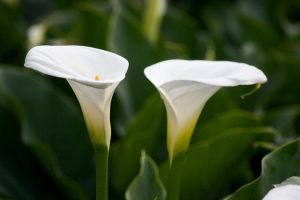
Alocasia has several common names, such as hen yu tou, lang du hua, wild taro, mountain taro, giant-root taro, big worm taro, tian yu, and tian meng. As an ornamental plant it is also called "dripping Guanyin," because if the ambient humidity is too high, water drips down from its broad leaves. Its flower is a spadix, with a large green spathe on the outside that opens into a boat shape, like a seated Guanyin.
Alocasia growth habits
Alocasia is a perennial herb with broad leaves. In northern China it must overwinter indoors, while in the south it can grow in the open ground. Its corms and leaves can be used medicinally, but they are toxic, and the leaf sap causes poisoning if ingested. What is called hai yu in Taiwan, China refers to calla lily.
Geographical distribution of Alocasia
Alocasia mainly grows in the tropical rainforests and wild banana groves of central-southern, western to southeastern Yunnan, at altitudes of 200-1100 m. It is also found in Sichuan, Guizhou, Hunan, Jiangxi, Guangxi, Guangdong and the coastal islands, Fujian, and Taiwan, China.
Outside China it is distributed in Bangladesh, northeastern India (Khasi Hills), Laos, Cambodia, Vietnam, Thailand, and the Philippines.
The flower language of Alocasia
White Alocasia given to classmates and friends has the flower language of "youthful vitality"; yellow Alocasia given to close friends has the flower language of "noble friendship"; orange-red Alocasia symbolizes love, so give it to the person you have a crush on, because its flower language is "I like you." Alocasia's shape is simple and pure, and the white Alocasia is especially fresh and delicate. Alocasia's flower language is very beautiful: pure, happy, elegant, and pure love. Alocasia itself also represents sincerity, simplicity, purity, and inner elegance.