What are the other names for Selaginella? Let us introduce you to its common aliases
Selaginella is also known as the nine-death resurrection herb - doesn't that sound very wuxia-like? That's because its vitality is extremely strong: when it encounters extreme conditions, its roots can separate from the soil on their own, curl up into a fist shape, and roll with the wind. When it meets water, it unfolds again, and the roots burrow back into the soil to seek moisture.
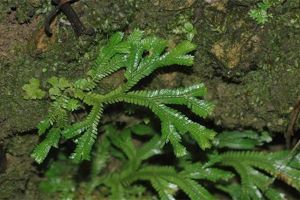
Selaginella family and genus
Selaginellaceae, genus Selaginella
Selaginella aliases
Nine-death resurrection herb, stone cypress, rock cypress grass, jaundice selaginella.
Distribution of Selaginella
Distributed in China, Siberia in Russia, the Korean Peninsula, Japan, India and the Philippines. It mostly grows on sun-facing rocks on hillsides, or in dry rock crevices. It is produced in most parts of China. It is mainly produced in Shandong, Liaoning and Hebei.
Morphological characteristics of Selaginella
Selaginella is a perennial herbaceous plant with an upright main stem, and many fibrous roots grow on the stem; the upper part of the plant grows in a whorled clump with many branches. The leaves are scale-like and arranged densely in a tile-like pattern; the surface is green, the leaf margins have colorless membranous edges, and the tips gradually taper into colorless long awns. It is monoecious, with spores arranged irregularly; inside are 4 yellow macrospores, and the microsporangia are orange-yellow.
Growth habits of Selaginella
Selaginella is also called the nine-death resurrection herb because it can come back to life after "death", and this is exactly what makes it so unusual. Its growing environment is quite special, however. It can often be found in dry rock crevices or on barren rocky slopes. When the water supply is sufficient, Selaginella absorbs water and its branches and leaves spread out, green and lovely. Once the water supply is lost, its branches and leaves lose their green color and curl up into a ball, as if they had withered and died. But with its survival trick of living when there is water and "dying" when there is none, Selaginella not only does not die of drought, but instead passes on from generation to generation and multiplies.
Myth and legend of Selaginella
Legend says that on the shore of the Heavenly Lake on Kunlun Mountain, there grew a kind of immortal herb that could bring the dead back to life. One year there was a great drought among the people, and a plague spread, causing many common people to die. The Dragon Girl in the Heavenly Lake could not bear to see the people suffer, so she secretly brought the immortal herb to the mortal world to heal the people. When the Dragon King learned of this, he flew into a rage and banished the Dragon Girl to the mortal world. After arriving in the mortal world, the Dragon Girl turned into the resurrection herb to save all living beings. The resurrection herb has strong vitality, and after being dried it can still grow when placed in water. This resurrection herb is Selaginella.