How to grow and care for Sedum dasyphyllum
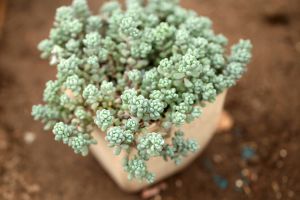
Common names for Sedum dasyphyllum
Sedum dasyphyllum is commonly known as Corsican stonecrop
Habits of Sedum dasyphyllum
Sedum dasyphyllum is a succulent plant in the genus Sedum of the family Crassulaceae, and winter is its growing season.
Sedum dasyphyllum is native to arid regions such as West Asia and North Africa. It is drought-tolerant and fears water; moderate watering during the growing season is enough to meet its growth needs.
Sedum dasyphyllum is a full-sun plant and grows best in a sunny environment, but it needs to be protected from intense direct sun; it can also grow in partial shade. It is cold-tolerant, and the most suitable temperature for growth is 18~25°C.
For home care, propagation is usually done by cuttings.
Seasonal care tips for Sedum dasyphyllum
Sedum dasyphyllum is a drought-tolerant plant and needs moderate watering during the growing season; simply keep the potting soil moist.
In summer, Sedum dasyphyllum is in a semi-dormant state. At this time, the potting soil needs to be kept dry, and water should not accumulate in the pot.
Cool autumn weather makes it the best season for fertilizing. A special fertilizer for succulent potted flowers can be used, and fertilizing 1~2 times is enough. Control the amount of fertilizer
to avoid excessive vegetative growth, which causes the stems to stretch too quickly and the leaves to become soft. If lodging occurs, stop fertilizing immediately, increase light, reduce watering, and let it gradually recover.
In spring and autumn, with ample sunlight and large temperature differences, the leaves of Sedum dasyphyllum turn pink.
Propagation methods for Sedum dasyphyllum
The most commonly used propagation method for Sedum dasyphyllum is cuttings. Cuttings can be taken throughout the year, but spring and autumn are best. During the growing season, cut a small cluster of healthy, plump stems and leaves, about 3~4 cm long, and plant them directly in a pot or insert them into the pot; the survival rate is high.
Combination suggestions: Sedum adolphi, Sedum pachyphyllum.