Crassula rupestris
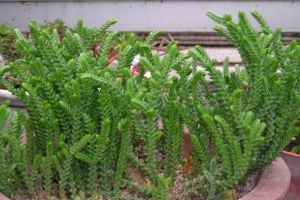
Growth Habits
Native to southern Feizhong. It likes warm, dry and bright light conditions, is not cold-hardy, tolerates drought and partial shade, fears waterlogging, and dislikes strong light.
Favorite temperature: 18-24°C
Watering: water once a week during the growing season
Light: bright light
Propagation: cuttings
Pests and diseases: brown spot disease, red spider mite
Combination suggestions: Sempervivum arachnoideum, Sedum japonicum
Care Tips for Crassula rupestris
Potting mix: repot every year in early spring, using a mix of leaf mold, potting soil and coarse sand, with a small amount of bone meal added. In winter it enters a semi-dormant state, and the potting mix should be kept dry.
Watering: water once a week during the growing season, and once every 2-3 weeks at other times, just keeping the soil slightly moist.
Fertilizing: fertilize once a month, using diluted cake fertilizer water or "Huiyou" 15-15-30 special fertilizer for pot flowers. Do not fertilize in winter.
Pests: when indoor ventilation is poor, the stems and leaves may already be harmed by red spider mite; when this occurs, spray with a 1000-fold dilution of 40% omethoate emulsifiable concentrate to kill them.
Propagation Methods for Crassula rupestris
Cuttings: rooting is fast and the survival rate is high when done in spring and autumn. Select relatively neat branches with tightly arranged scale-like leaves. Cut them into 12-15 cm lengths, insert them into a sand bed, keep at room temperature 21-24°C, and they will root 20-25 days after insertion; pot them up 1 week later.