White Phoenix
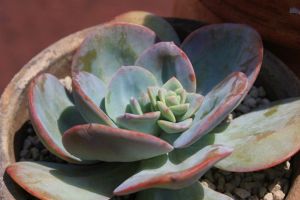
Growing habits of White Phoenix
White Phoenix belongs to the Crassulaceae family, Echeveria genus, and is a cultivated variety. It prefers a warm, dry environment with plenty of sunlight. Summer is its lush growing season.
Favorite temperature:18~25°C. It does not need much water. There is a very thin layer of white powder in the center of the leaf, so when watering, avoid the center of the leaf to prevent affecting its appearance. During the growing season, watering once a week is sufficient.
Common pests and diseases include: rust disease, root-knot nematodes
Care tips for White Phoenix
Repotting: Repot every spring, using a mix of peat soil and coarse sand. During the growing season, the potting soil should not be too wet.
Watering: Water once a week during the growing season; in winter, water only1~2times, keeping the potting soil dry. When the air is dry, you can spray water around the plant to increase air humidity.
Fertilizing: Fertilize once a month during the growing season1times, using diluted cake fertilizer water or a special succulent fertilizer. Be sure not to let the fertilizer liquid stain the leaf surface.
Light: White Phoenix likes full-day sunlight. Normally it is green, and as sunlight duration increases it turns red. In summer, when temperatures are high, it is suitable to shade it, keep it ventilated and control watering. You must pay special attention, otherwise it can easily die.
Propagation methods for White Phoenix
⟧ Sowing: Sow immediately after the seeds mature. The suitable germination temperature is16~19℃。
Cuttings: In late spring, cut off mature leaves for cuttings, insert them into a sand bed, and after about3weeks they will take root. Once young plants have grown, pot them up. Pay special attention that the cut surface should be flat and that the cut should be allowed to dry before inserting.
Division: If daughter plants sprout from the base of the mother plant, they can be propagated by division in spring. After flowering, cut off the flower stems to avoid consuming nutrients.
Suggested planting combinations: Black Prince, Sempervivum arachnoideum