How to grow Sedum hispanicum? Introduction to succulent care methods
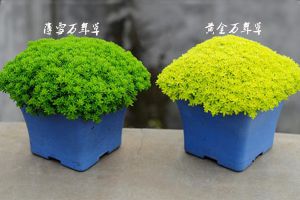
Common names of Sedum hispanicum
Sedum hispanicum is commonly known as "stonecrop"
Habits of Sedum hispanicum
Sedum hispanicum belongs to the genus Sedum in the family Crassulaceae, and winter is its vigorous growing season.
Native to South Asia to Central Asia. It likes a warm, dry and sunny environment, fears waterlogging and strong direct sunlight, and tolerates partial shade. The suitable growing temperature is 18~25℃。
Home care usually uses cuttings for propagation. Common pests and diseases include: southern blight, scale insects
It likes full sun and can also grow in partial sun, but the leaf arrangement will be looser. It has strong drought tolerance and grows quickly. It fears heat and tolerates cold; when cultivated in Taiwan, China, it is not easy to bloom.
Care tips for Sedum hispanicum
Repotting: when repotting every spring, thin out plants that have grown too dense; after 2~3years of cultivation, they need to be re-propagated by cuttings for renewal. During the growing season, keep the potting soil slightly moist. In summer it is in a semi-dormant state, so keep the potting soil slightly dry.
Watering: winter watering depends on the room temperature. As long as there is no long-term drought or long-term moisture, it can grow very well. You can water once when the medium is slightly dry. If it is not watered for a long time, the leaves will noticeably shrink and look listless. If the plant shape is not compact and shows signs of legginess, pay attention to increasing sunlight hours and appropriately reducing watering.
Fertilizing: fertilize 2~3times throughout the year. Too much fertilizer will cause the leaves to be sparse, soft and poor in form.
Light and temperature: except for appropriate shading in midsummer, it can take full sun. In autumn, when there is sufficient light and a large temperature difference, the leaves will turn pink.
Propagation methods of Sedum hispanicum
Cuttings: can be done all year round, preferably in spring and autumn. Cut a small cluster of top branches, 4~5cm long, and plant them directly in pots or insert them into a sand bed. The survival rate is relatively high; in pots,4~5after weeks the stems and leaves can fill the pot.
Suggested planting combinations: Sempervivum 'Ouhousen', Echeveria 'Dae-Ho-Jeon'.