Do these 3 things well in the management of young grape vines in May and June, and a bumper harvest the next year is guaranteed
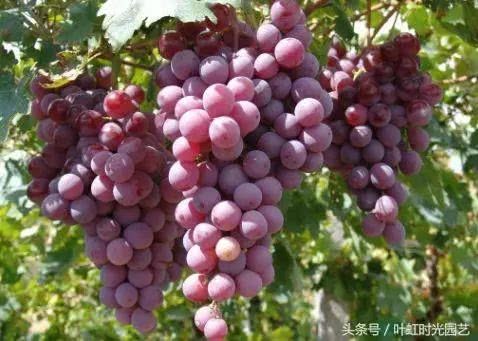
The healthy and rapid growth of the current-year young grape vines has a direct impact on the fruit set and bumper harvest the following year, so doing a good job of management at this stage is crucial. May is about to arrive, so below the editor will share the management measures for young grape vines over the past month or two.
Timely bud removal and pinching
When newly planted young grape vines of the current year grow to 20 cm from the bottom wire, they should be pinched in time. After pinching, for the secondary shoots that sprout one after another, keep the top 4 buds, and pinch and remove all the secondary shoots below, leaving 1-2 leaves on each.
Reasonable topdressing
When the young vines have grown more than 6 leaves, apply topdressing. At first, urea alone can be applied at 5 kg per mu, and afterward the application rate should be gradually increased according to the growth vigor.
Generally apply once every 10-15 days per mu, and water promptly after fertilizing to replenish moisture. Follow the principle of "spread evenly, apply light fertilizer frequently" to avoid fertilizer burn damaging the roots.
For young grape vines with weaker growth, a root-promoting agent can be poured onto the roots to promote new root growth.
Timely use of pesticides to prevent and control diseases and pests
The absence of diseases and pests is the prerequisite and guarantee for the rapid growth of grape seedlings.
May is still a period of high incidence of black spot disease, so prevention should be focused on. Follow the principle of applying once every 4-5 days when disease is present, once every 7-10 days on sunny days, and once after every rain. Kaifu, Fuxing, carbendazim, mancozeb and others can be used alternately.
Entering June, downy mildew and other diseases break out one after another, and can be controlled with agents such as dimethomorph, Anke, and DuPont Kocide. At the same time, also pay attention to additionally applying fenitrothion or dichlorvos at 800 times or decis at 3000 times solution to control the clearwing moth.
Each time disease is prevented, pay attention to adding foliar nutritional fertilizer, which helps promote seedling-stage growth and flower bud formation, laying a good foundation for a bumper harvest the next year.