How to appreciate bonsai? Let us take you to experience the beauty of bonsai
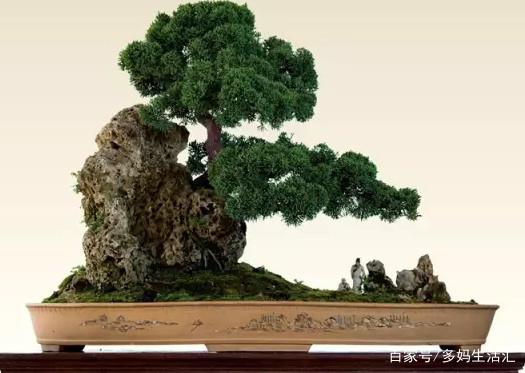
As a work of art, how to appreciate bonsai is not a simple matter. It requires people to have a certain level of thought, cultural and artistic cultivation, and life experience. To improve artistic cultivation, one needs to accumulate aesthetic experience through practical training. The appreciation of bonsai is in fact the aesthetics of bonsai. Bonsai is based on natural trees and rocks, and plants also have the characteristics of life. Therefore, natural beauty is an important aspect of the beauty of bonsai. The natural beauty of trees includes the beauty of the roots, trunk, branches and leaves, flowers and fruit, and the overall posture, as well as the beauty of color from seasonal changes. The shapes and colors of the roots, stems, branches, flowers, and fruit of trees and bonsai are organically combined to form the overall beauty of the landscape.
The shapes of Chinese bonsai, although taken from natural landscapes and trees, are not mechanical imitations of specific grasses and woods, a single mountain or a single stream, but are highly generalized and refined landscapes and tree scenery, along with artistic treatment, so that they have primary and secondary elements, pause, restraint, density, and balance. Contrast and response in a varied yet unified layout, striving to achieve an artistic realm that condenses natural scenery. The beauty of natural scenery after artistic treatment is scenic beauty. Pictorial beauty is an important aspect of the beauty of bonsai. The quality of the art of bonsai shaping is usually judged by its pictorial beauty. The beauty of bonsai can be expressed through different styles. Chinese bonsai has many styles and forms. Mastering this aesthetic knowledge helps us appreciate the beauty of bonsai.
As an art, bonsai not only has pictorial beauty but also expresses a profound artistic conception. While appreciating the scenery, it should not only let people see the scenery, but also inspire beautiful emotions, beautiful will, and beautiful ideals. When circumstances are poor, people's mood is still beautiful. It makes bonsai works thought-provoking and gives them the charm of being worth viewing in every way. As the bonsai creator has already melted their own feelings into the landscape during the creative process, when the viewer enters such a mood of beautiful feeling, will, and ideals, they can resonate with the author's bonsai.
Artistic conception is the highest realm of the art of bonsai. It is built on the foundation of picturesque scenery, and the mutual penetration of the two is difficult to separate. Sometimes, the artistic conception is expressed through recitation of the bonsai. Therefore, the appreciation of bonsai must have a certain literary cultivation. In the creation of bonsai, the most difficult thing to express is the beauty of artistic conception, and the most difficult thing to appreciate is also the beauty of artistic conception.