Appreciation of the 2018 Photography Contest Terrace Category Entries
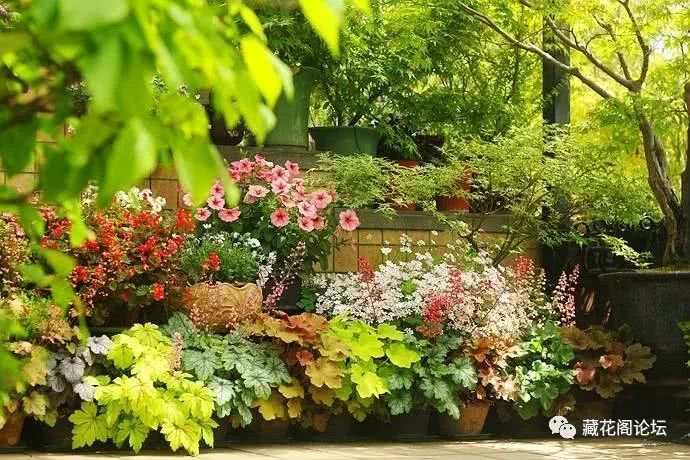
It was only just May 2018, yet the temperature in Hangzhou had already reached 30°C+.
The muggy heat came rolling in, which is also the most distinctive feature of the Jiangsu-Zhejiang-Shanghai region.
Although spring is exceptionally short, I still captured the beauty of the flowers and plants with my camera.
I personally prefer woody and bulbous plants.
I love the powerful trunks of woody plants and their lush green shade.
I also love the colorful blooms and playful, adorable forms of bulbous plants.
I grow relatively few herbaceous plants; they are a rare accent amid the shade of the green trees.
Bulb Season
I have been growing oxalis for five years now.
What I love most is its rich variety of flower colors.
Of course, more importantly, it brings vitality to deep winter and early spring.
Generally, autumn-planted bulbous oxalis blooms from September to May of the following year.
Mine are mainly the OB series, with peak bloom from December to May of the following year.
From late August to October, during the autumn planting season, select high-quality bulbs.
Cultivate them in soft, fertile soil.
I generally use worm castings, or a mix of slow-release fertilizer plus peat soil for planting.
In a common 12 cm oxalis pot, plant about 1-4 bulbs.
However, for the 2017 autumn planting season I chose an 18*18 square pot.
For most varieties, about 9 bulbs are densely planted per pot.
During the growing period, pay attention to nitrogen fertilizer application; during the flowering period, pay attention to supplemental phosphorus fertilizer.
After the flowering period, appropriately apply some potassium fertilizer to increase underground bulb reproduction.
Oxalis is a typical sun-loving plant.
It prefers a growing environment with good light conditions.
My terrace happens to face south.
Therefore it is very suitable for growing oxalis.
Every autumn planting season, I arrange a square formation of oxalis about 12 sq m on the ground.
When peak bloom arrives, they become a carpet of flowers.
Oxalis flowers of every color compete in splendor; it really is the most beautiful scenery!
Although I don't grow many herbaceous plants, these bright little elves are also indispensable elements.
Heuchera has gradually become another specialty of my home.
Most heuchera grown outdoors in the Jiangsu-Zhejiang-Shanghai region cannot make it through summer smoothly.
Especially in places exposed to 40°C high-temperature scorching sun.
My terrace is also an environment of rolling heat waves.
However, because I have several very large woody plants providing shade.
So the heuchera safely hide under the shade and grow vigorously.
As the weather slowly heats up, about 1-2 waterings per day are needed.
I use clay pots with very good breathability and water permeability for cultivation.
I am quite curious.
I like to try somewhat novel plants.
This year I took on the challenge of grape hyacinth and Greek anemone.
Neither plant is very difficult to grow.
But they are very prone to bulb rot, with the main problem being the breathability of the soil mix.
You can refer to the care methods for succulents.
Add a large amount of granular medium to the soil to enhance water permeability.
To prevent the bulbs from becoming moldy and rotting.
Of course, what I love most is still woody plants. In spring, if flowers and plants are the main characters.
Then woody plants are the indispensable background.
Always a faint, subtle foil in photography.
This year I got the hang of growing Iridaceae plants.
So I added several varieties of Iridaceae bulbs.
The most important cultivation point for these varieties is dense planting.
Dense planting is the greatest way to make bulbous plants burst into full pots.
Then there is the lodging problem, which has always been a drawback of Iridaceae.
In 2018, through my observation, analysis, and practice.
I think potassium fertilizer plays an important role in the care of Iridaceae plants.
The role of potassium fertilizer itself is to improve plant stress resistance.
Resistance to pests and diseases, resistance to freezing, resistance to lodging.
Therefore, appropriately applying additional potassium fertilizer can help Iridaceae plants stand on their own without relying on tying and other methods.
For example, this year I used this method on the following three plants.
The results were all very good; they achieved a full-pot bloom without support.
Ixia:
Freesia:
Native freesia:
I personally prefer plain-colored flowers.
But I do have a few rather brightly colored plants at home as well.
===
Thank you for viewing.
I am very happy about the event organized by Canghua.
I hope everyone likes my terrace.
Editor: Thanks to VV for participating in the contest, and we welcome everyone to join in actively~
A watering cart suitable for gardens and terraces