Potted cockscomb blooms continuously, with flowers that look like colorful rooster combs
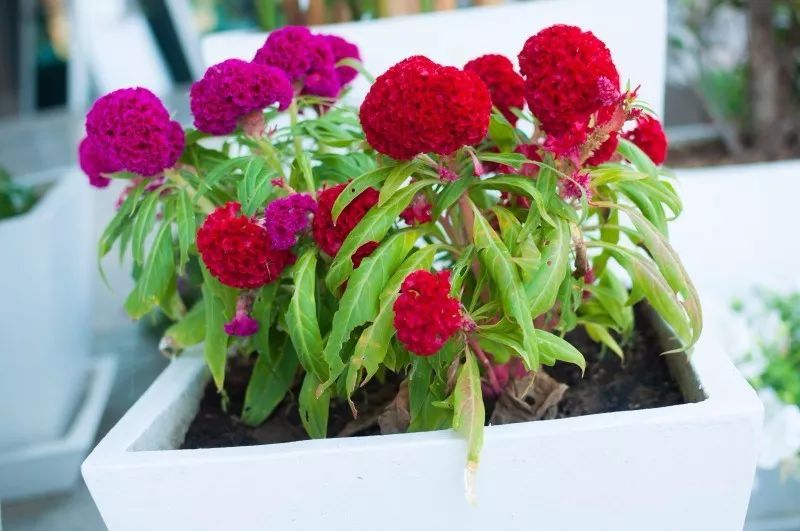
Cockscomb (Celosia) is an ornamental flower with very vivid colors, and it is also a very common tropical ornamental plant. In the southern regions, many friends use cockscomb as a landscaping plant. It actually has three types, namely the spike type, the crest type and the globe type, and the flower colors are even more varied, looking especially fascinating.
The most common flower colors of cockscomb are yellow, pink, red, orange, magenta, and so on. There are dwarf varieties that only grow to just over 10 cm, and some that can grow to over 1 m tall. Propagation is very simple: just buy some seeds and sow them directly after warm spring arrives, and within a few weeks they will grow into potted plants.
1. Preparation:
When planting cockscomb, be sure to use a larger container with more drainage holes. In addition, you need an environment with plenty of sunlight. Cockscomb is a tropical flower that likes warm and humid conditions year-round, and it can thrive in hot and humid environments, but it is afraid of cold. During care, give it more than 6 hours of light each day. For potted plants, keep the potting soil watered thoroughly only after it dries out, and avoid waterlogging in the soil, otherwise the roots and stems can easily rot.
2. Planting:
Cockscomb has varieties in all colors, and you can plant one of each, so the whole yard and balcony will be full of vitality. Spring is the most suitable time for sowing and propagating cockscomb, and the best cultivation temperature is around 20°C. Prepare some flower pots 15 cm in diameter, put more than 10 seeds in each pot, and generally after 6 to 8 weeks the whole pot will be full of seedlings.
3. Cultivation:
Growing cockscomb in a flower pot is very easy. Keep the potting soil moist when sowing, gradually reduce watering after the seedlings emerge, and once they grow stronger, water thoroughly only after the potting soil dries out. The growing location should have more than 8 hours of light each day. If it is kept in a cool or shaded place, cockscomb will likely only grow leaves and not bloom.
When watering, avoid waterlogging in the soil. Soil that stays wet for a long time can easily cause root rot. Cockscomb has a certain tolerance to drought.
4. Pests and diseases:
If potted cockscomb is kept indoors, it may encounter pests and diseases, such as the common red spider mite, stem rot and leaf spot. To avoid stem rot and leaf spot, it is best to water appropriately and avoid soil that is often wet. In addition, keep the environment ventilated and cool. Water again only after the soil has completely dried out, and avoid overly dry air when keeping it indoors in winter.
To avoid pests and diseases, it is best to give it as much light as possible and keep the environment ventilated, and then there will basically be no pests or diseases.
5. Fertilizer requirements:
When cultivating cockscomb, as long as you use some compost soil, there is basically no need for much fertilizing later. If the growing soil is not fertile enough, cockscomb may grow relatively slowly. If you find that the branches and leaves are growing very slowly, in addition to increasing light, you can also supplement once every 2 to 3 weeks with a dilute organic liquid fertilizer or other water-soluble fertilizer.
The picture above shows some spike-type cockscombs; the purple-flowered variety is also exceptionally fascinating. They are very suitable for planting on a south-facing or east-facing balcony. As long as sufficient sunlight and a ventilated environment are ensured, they basically have no pests or diseases. Cockscomb has a particularly long flowering period, is highly ornamental, and is especially easy to care for, requiring no frequent management after planting.