How to collect wild Chinese herbal medicines for treating rhinitis
Rhinitis is a stubborn minor illness, and it also has a deep connection with the common cold, as they influence each other, occurring together and recurring. Even for initial rhinitis, Western medicine cannot eliminate the root cause within a year, and it easily recurs after stopping the medication, which is very distressing. Chinese herbal medicine for treating rhinitis is different: it can treat the root cause and eliminate it. Many Chinese herbs for treating rhinitis also have characteristics such as being wild and highly potent, such as Schizonepeta tenuifolia (Japanese catnip), licorice, Xanthium sibiricum fruit (cocklebur), and Asarum sieboldii (wild ginger). Wild Chinese herbs are even more effective, so rhinitis patients who collect Chinese herbs and have the conditions to do so can increase the potency by collecting the herbs under the guidance of a treatment formula.
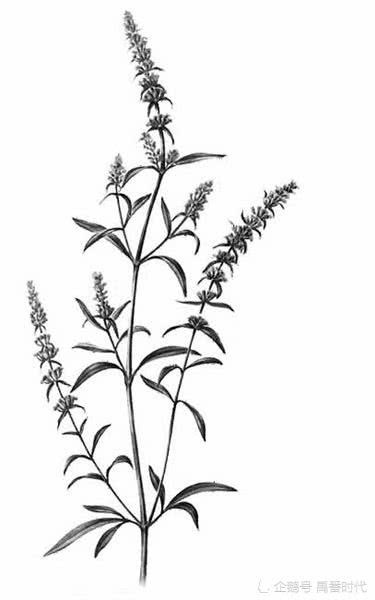
Schizonepeta tenuifolia spikes
Using traditional Chinese medicine to treat rhinitis involves many formulas, as well as some folk remedies. Choosing the formula comes first, and external use can be combined with oral administration. The external-use formula is Maxin Canggan Ointment, for which you prepare 30 g each of Xanthium sibiricum fruit and Magnolia biondii flower buds, 20 g each of Ephedra sinica and licorice, and 12 g of Asarum sieboldii. After grinding into a fine powder, the powder can be used, or it can be made into an ointment to apply to the nostrils, 3-4 times per day, combined with decoction to eliminate inflammation.
While applying the external medicine to the nostrils, Chinese herbs should also be taken orally. One of the formulas is Jingfang Shengyu Decoction, which consists of 10 g each of Schizonepeta tenuifolia, Saposhnikovia divaricata, Cimicifuga foetida, Cornus officinalis flesh, Astragalus membranaceus, Liquidambar formosana fruit, Magnolia biondii flower buds, Xanthium sibiricum fruit, licorice, and Gleditsia sinensis thorn, 12 g each of Centipeda minima, Coix lacryma-jobi seed, and Benincasa hispida seed, 15 g of Acorus gramineus, and 6 g of Tiancao Jucheng. This is one decoction formula. Follow the usual method for taking decoctions; after symptoms disappear, consult a doctor for consolidation treatment and regulation.
Xanthium sibiricum fruit
Astragalus membranaceus can tonify qi and raise yang, secure the exterior and benefit the defensive qi. In this formula, it also has the power to draw out toxins and generate flesh, and to promote urination and reduce swelling. Xanthium sibiricum fruit can treat head wind, dizziness, sinusitis, red eyes, eye opacity, wind-warm arthralgia, boils, scabies, skin itching, hemorrhoids, dysentery, colds, and more. It can dispel wind and dissipate heat, resolve toxins and kill parasites, disperse wind and remove dampness, warm and treat arthralgia and contractures, and open the orifices and stop pain. You can collect plenty of Xanthium sibiricum fruit and use it flexibly; a single herb can attack and solve many kinds of troubles in daily life.
If you have questions or need help, you can call 01062170649 13269852331