Taiwan Agricultural Development Company criticized for competing with the people for profit; Chen Yuran, in charge of planting, transport and sales, angrily asks: With whom are we competing for profit?
Taiwan's agricultural team, "Taiwan Agricultural Development Company," has made its move, not only leasing farmland from Taiwan Sugar Corporation and recruiting banana farmers to join production cooperation, but also preparing to build an "International Fresh-Keeping Logistics Center," in an attempt to integrate production, collection and export in a one-stop chain. This move, however, has triggered panic in agricultural circles, and recently word spread that it will lease 235 hectares of forest land in Taitung from Taiwan Sugar Corporation as production land for pineapple sugar apples, fueling widespread rumors of "competing with the people for profit."
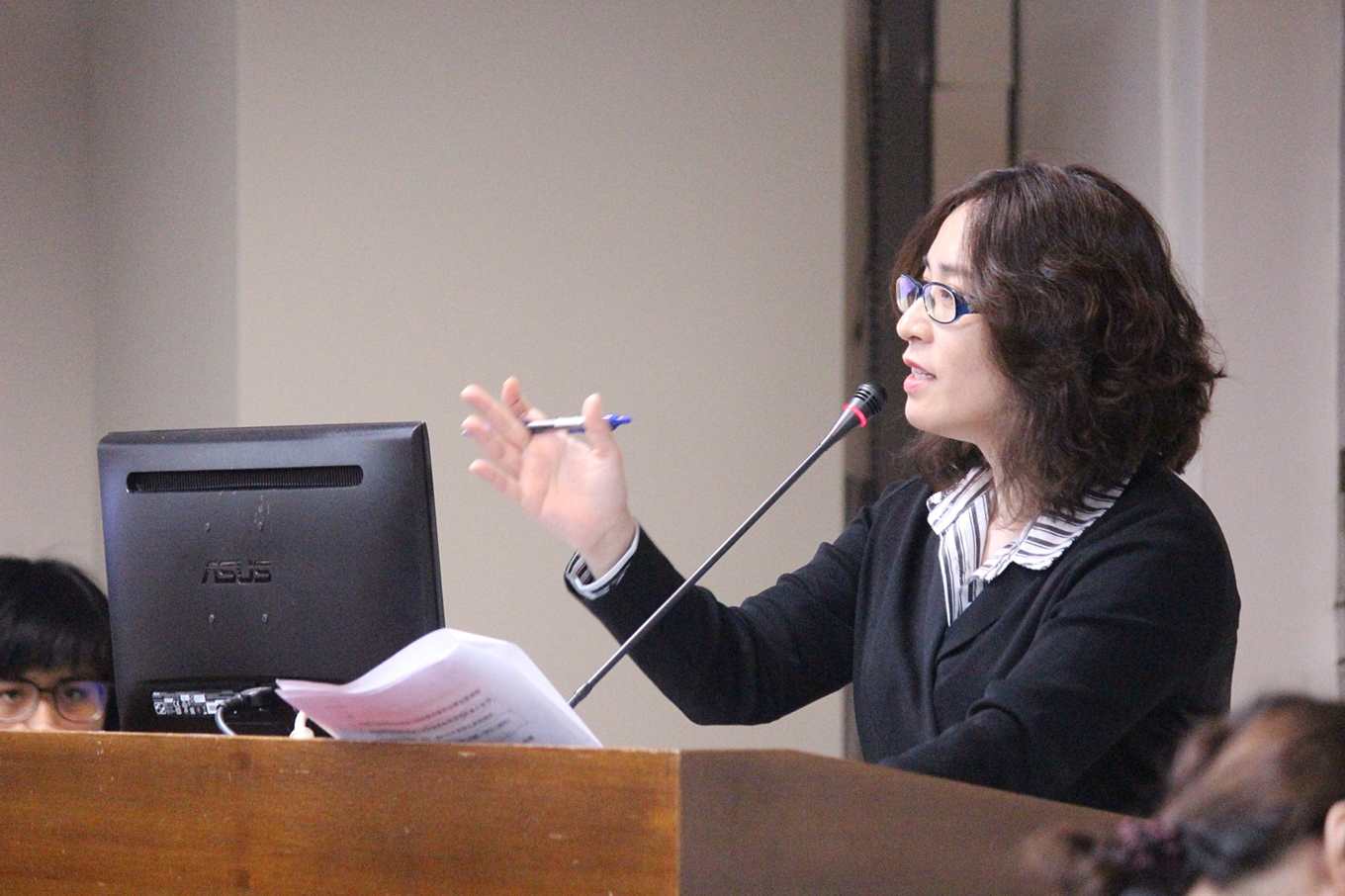
Lin Congxian, head of the Council of Agriculture, went to the Legislative Yuan's Economics Committee yesterday (the 2nd) to take questions, where he was repeatedly questioned by lawmakers about Taiwan Agricultural Development Company's unclear role. New Power Party caucus lawmaker Gao Lu·Yiyong·Bajila even said bluntly that Taiwan Agricultural Development Company should have led small farmers to fight as a group, but as things stand, it has been seen time and again enclosing land to farm itself. "Is this not competing with the people for profit?" The back-and-forth exchanges among lawmakers drew a rebuttal from Taiwan Agricultural Development Company chairman Chen Yuran from afar: "Questions should be more professional. With whom have I competed for profit?"
Farmers: We don't know how Taiwan Agricultural Development Company actually intends to integrate things?
A pineapple sugar apple farmer surnamed Hong said that most existing traders "go it alone" to sell to mainland China and find it hard to integrate: "The quality is all different, so naturally it's very hard to control exports." If Taiwan Agricultural Development Company could play the integrating role, that would naturally be good, "but the key is to draw clear distinctions." Farmers handle production, Taiwan Agricultural Development Company handles transport and packaging, and with roles clearly defined, "of course we wouldn't oppose Taiwan Agricultural Development Company."
The pineapple sugar apple farmer surnamed Hong went on to explain using New Zealand's kiwifruit integration model: "New Zealand kiwifruit farmers are all shareholders, so naturally they make their products well." But as for why there is now such a loud backlash in agricultural circles, Hong said bluntly it is entirely because farmers don't know how Taiwan Agricultural Development Company actually intends to integrate small farmers.
Traders: Taiwan Agricultural Development Company's role and function should be clearly defined, to help solve "export pain points"
Facing Taiwan Agricultural Development Company's plan to use state funds to create an "export model," building a system from planting to harvesting and collection and sales from scratch rather than cooperating with the existing domestic industry chain, a global fruit trader who declined to be named said, "Taiwan Agricultural Development Company jumping directly into the industry chain is both right and wrong. How its role and function are defined is very important."
The trader said Taiwan mostly has a "scattered sand" business model, making it very hard to unite around a single goal, and the "small boss" mentality is strong. If Taiwan Agricultural Development Company wants to directly guide existing production-and-marketing farmers, it will have to put in a lot of hard work, and the results may not be very good; but Taiwan Agricultural Development Company can indeed leverage state resources, funds and policy power, while strictly adhering to the principle of "not competing with the people for profit," to help solve the pain points of export items.
"For example, from the production side, if you want to supply externally under a GAP (Good Agricultural Practice), the farm needs a toilet. Which Taiwanese farm has a toilet? How can Taiwan Agricultural Development Company help producers who are determined to focus on exports fully implement the whole set of standards? Also, post-harvest fresh-keeping is a very big export pain point. Ordinary trading exporters won't invest too much money in a single industry for this; as long as they get through and make money, that's enough. But if the national team steps in to provide guidance, it must ensure every step is done completely. Right now with Taiwan's fruit exports, opening a container is like playing the lottery. Some containers open up beautiful, some containers open up with thirty percent spoiled. How can you do stable business like that?"
The trader said that if Taiwan Agricultural Development Company could provide guidance to collection centers willing to improve quality, using policy power to help raise the quality of Taiwan's goods, traders would naturally find a way to sell them, rather than spending the country's money itself to build factories or do sales.
Traders: Exports depend on competitive strength; bananas are no longer an investable item
A pineapple sugar apple trader surnamed Li said bluntly, "It's not hard for traders to set up post-harvest equipment and a cold chain; it's just a question of whether they do it or not." If the item truly has export strength, traders will naturally do business for business's sake: "Assuming the market is OK, if you get the post-harvest equipment in order, there's a market and you can make money. Why wouldn't traders do it?"
In the view of the trader surnamed Li, "Taiwan's agricultural exports are no longer just about setting up a post-harvest system." Taking Taiwan bananas as an example, "Everyone thinks it's post-harvest handling that can't keep up, but actually it's because it is no longer a competitive product." Agricultural products without export strength naturally have no traders willing to invest in equipment. Li was pessimistic about solving export difficulties through Taiwan Agricultural Development Company.
Lawmakers: Demand that Taiwan Agricultural Development Company submit a report to clarify its role
After rounds of questioning by lawmakers, Liao Guodong said at the Economics Committee, "From morning until now, we've kept talking about Taiwan Agricultural Development Company, yet they haven't said a single word." He demanded that Taiwan Agricultural Development Company submit a report to clarify its role.
Taiwan Agricultural Development Company chairman Chen Yuran: "Where exactly are we competing for profit?"
In response to lawmakers' questions, Taiwan Agricultural Development Company chairman Chen Yuran, in an interview with "Upstream and Downstream" reporters, angrily said, "Where exactly are we competing for profit? Please say it clearly." Taking lettuce exports as an example, also exporting to Japan, ordinary traders sell to McDonald's while Taiwan Agricultural Development Company focuses on supermarkets: "Did I grab your market?"
Chen Yuran admitted that Taiwan Agricultural Development Company is indeed planning to set up its own production cooperative; but will this cooperative later squeeze out the survival space of existing production cooperatives? Chen Yuran said, "No." In the future, as long as production cooperatives are willing to meet Taiwan Agricultural Development Company's specifications, "we will cooperate with existing cooperatives."
Chen said that although this year it cooperated with existing pineapple sugar apple production cooperatives, "they didn't give us the best quality." Even though he was somewhat taken aback, Taiwan Agricultural Development Company still believes this is the first year of cooperation and things will get better going forward.
Why did Taiwan Agricultural Development Company target "pineapple sugar apple" as the priority item to promote? Chen Yuran said that because pineapple sugar apples are grown only in the Taitung area, once the model is successfully established, there will be a chance to replicate and expand it outward. "If we can make it work, it can become a New Zealand kiwifruit-style formula. With kiwifruit, the benefits all go to the fruit growers, not to us."
Chen Yuran: Establish SOPs to let farmers see the possibilities
Regarding outside criticism that Taiwan Agricultural Development Company should help improve quality rather than jump into the industry chain itself, and that its role is unclear, Chen Yuran said, "If you go tell those fruit farmers now, they all say I've been a farmer for thirty or forty years, nobody wants to listen to you. At this stage, Taiwan Agricultural Development Company still needs to establish a feasible SOP through its own farms, 'so farmers can see this really can be done, and then they will follow along.'"
Currently Taiwan Agricultural Development Company has recruited only eight new banana farmers into production cooperation, jointly operating 12 hectares of banana plantations, but the second round of recruiting and selecting new banana farmers has quietly been put on hold. How Taiwan Agricultural Development Company interacts with existing production-and-marketing roles in the future remains to be seen; Chen Yuran said helplessly that people need to set their sights on the future: "If we keep stirring up 'competing with the people for profit' like this, how am I supposed to get things done?"
A milestone in Taiwan-Japan agricultural trade | Taiwan Agricultural Development Company joins hands with Japan's Farmind, with procurement amount of 10 billion yen over five years