A flower enthusiast actually managed to grow thousands of orchids from a single plastic bottle - it feels truly magical.
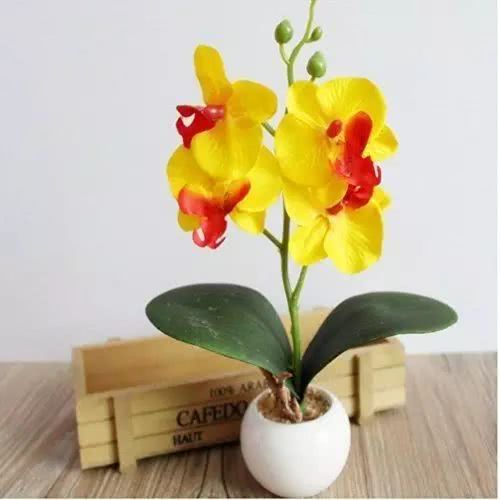
Orchids have an enormous family, with more than 20,000 known species, distributed all over the world except Antarctica. They have unusual flowers, such as the Phalaenopsis (moth orchid), which most flower enthusiasts recognize, with brilliant flower colors.
Which of those strange orchid varieties have you seen at the flower market? Come and share notes! (A tropical maritime climate is the most suitable for growing orchids, though of course you should choose according to the variety.)
Many orchids are propagated by tissue culture; an extremely small piece of plant tissue can produce an orchid, though of course this has to be done in a laboratory environment, with the plant tissue placed in a glass petri dish. You can see hundreds and thousands of tiny orchids on the plastic bottles above.
Once the plants grow a little bigger, they can be transplanted onto foam-like small baskets. The ones above are grown on a large scale; these are all media with very good drainage, not soil!
This young orchid above is growing on water-absorbing sponge; growth requires moisture, while root growth also requires plenty of air, so this is how the seedlings are cultivated.
Besides the environment, the medium is the most important thing when growing orchids. As they gradually grow, you have to provide them with a moist but well-drained growing environment. The roots absolutely must not sit in water, but the medium should be kept slightly moist.
Most orchids that grow in the wild do not need soil; many of them are epiphytes, with their roots growing on tree trunks or branches. Their roots do not soak in water but are exposed to the air. The roots of these orchids, along with the "pseudobulbs," store moisture, so they do not need much watering, but the ambient humidity must be maintained.
Below I introduce 5 common unusual orchids I saw at the flower market;
1. Miltonia
The Miltonia is a very common and unusual little flower. Its petals have bright alternating red and white markings, looking like little owls, and the center of the flower's core is yellow, like an owl's beak.
The Miltonia needs plenty of water, but requires a medium with very good drainage. It likes high humidity and a relatively cool environment and a mild climate, which is what better induces it to bloom. Its light requirements are lower than those of most other orchids.
2. Paphiopedilum
The Paphiopedilum looks very unusual. Some people think it looks like a slipper and call it the "slipper orchid." I think it looks more like a hairy pitcher plant. Although they look bizarre, they are all very expensive - I can't afford them!
When this orchid blooms, it has a very prominent pouch that looks like an insect-catching trap, but it is actually just decorative.
The slipper orchid is not difficult to grow in the southeastern region of China. They like relatively high humidity, do not like frequent watering, and do not need too much light - placing them under a fluorescent lamp by an east window is fine.
3. Oncidium
The Oncidium is also called the "dancing lady orchid," with flowers like dancing maidens. When it blooms, dozens to hundreds of flowers grow along the flower spike, and it is truly stunning.
There is also a miniature Oncidium, with a compact plant and flowers that are even smaller!
The Oncidium relatively likes plenty of light.
4. Cattleya
When the Cattleya is in full bloom, it looks a bit like an iris. They are very popular cut flowers and corsage flowers, with a great many flower colors, the most common being pink and purple.
Miniature Cattleyas are becoming more and more popular. They often grow by the windowsill and like plenty of light.
5. Vanda
The Vanda is native to the Philippines and has medium or large varieties, with spicate inflorescences, and likes to grow in a warm environment. It likes bright light; plenty of sunlight, high humidity and a warm environment are what it likes. It needs frequent watering, especially when the growing tips are developing.