How to Harmlessly Remove Diseased Leaves and Pests from Pothos: 7 Steps to Growing Healthy Potted Plants
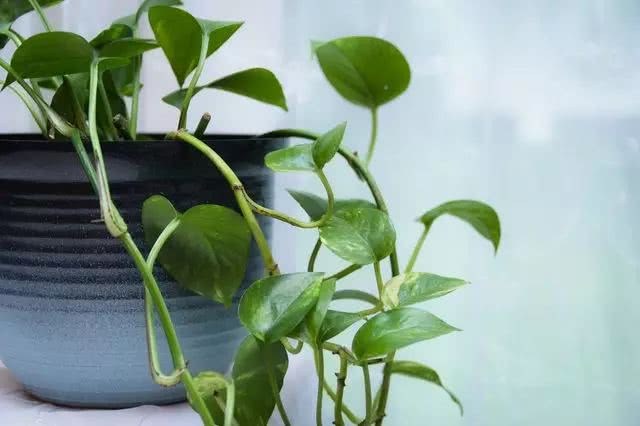
If your pothos has bugs or its leaves are turning yellow and rotting, how do you deal with it without chemicals? You need to prepare the following items.
1. Harmlessly removing diseased leaves and pests from pothos
1. Distilled water, rainwater or cooled boiled water
2. Sharp, sterilized scissors or a knife
3. Soft cloth strips or wet paper towels
4. Cooking oil and a detergent without bleaching powder
5. Spray bottle
2. Various issues in pothos care:
Step 1: Placement
Although potted pothos cannot be exposed to harsh sun, it also cannot be placed in too dark a spot; bright light or indirect light is best.
If the light is too dim, the leaves will fade, turn pale yellow and look sickly. At this point you need to move the plant to a warm, well-lit place, and it must not be exposed to cold.
Step 2: Check whether the soil is dry or moist
If you are not sure whether the potting soil is dry, you can stick your finger into the soil, or use a dry wooden stick instead; a glance will tell you whether it is dry or not.
If it is dry, just water it. The amount of water is easy to judge: just watch until water drips out from the drainage holes at the bottom of the pot. Also, do not use tap water directly, as it contains bleaching powder, chlorine and so on; it is no good unless left to stand for three days. You can use cooled boiled water or rainwater (tap water only becomes harmful after being used for a long time).
Step 3: Prune diseased branches and leaves
Promptly cut off poorly developed or weak, diseased branches and yellow leaves, so that it can grow more densely.
If you want your pothos to grow with a trailing, hanging effect, or to grow as a climbing vine, then you need to prune the weak branches; if you want it to grow as a climbing vine, you need to give it some support so it grows upward.
Step 4: Remove pests
Removing pests does not necessarily require pesticides; you can try an organic, healthy method. Take out the items prepared above, and use 2 tablespoons of detergent, 2 tablespoons of cooking oil and 4 liters of distilled water/rainwater. This is very effective against severe scale insect infestations. After spraying with this mixture, wait two hours and then spray once more with clean water. Repeat this method for 5 to 7 days, and the pests will be completely gone.
Step 5: Clean the leaves
At least once a week, wipe the leaves clean with a damp soft cloth. Leaves covered in dust will not grow well, while clean leaves grow healthily and quickly.
Step 6: Soil selection
When your potted pothos slows its growth or even stops growing, you can repot it, switching to a well-draining, fertile, loose humus soil. The size of the pot should be considered according to the size of the plant, the drainage holes must be good, and it is even better to place broken tile pieces at the bottom of the pot.
Step 7: Fertilizer selection
For fertilizing pothos, it is recommended to use a diluted, slow-release water-soluble fertilizer. Of course, choosing a foliage-type green fertilizer directly is also quite good. It can be used throughout the growing season; apart from not fertilizing in winter, it can be supplemented appropriately in the other seasons.
Notes:
If the root system has rotted, or if the pothos branches are infected by pathogens, you need to cut off the diseased branches, then mix detergent and clean water at a ratio of 1:9, and soak the pathogen-infected or rotting branches in it for a few minutes to disinfect them.
Overwatering pothos can also cause yellow leaves. The potting soil should not become waterlogged. For water culture, pay attention to ventilation, and when the environment is dry, increase humidity appropriately. The lighting in the care environment must be bright.