Are store-bought strawberries bright red and large because they have been treated with hormones and dye?
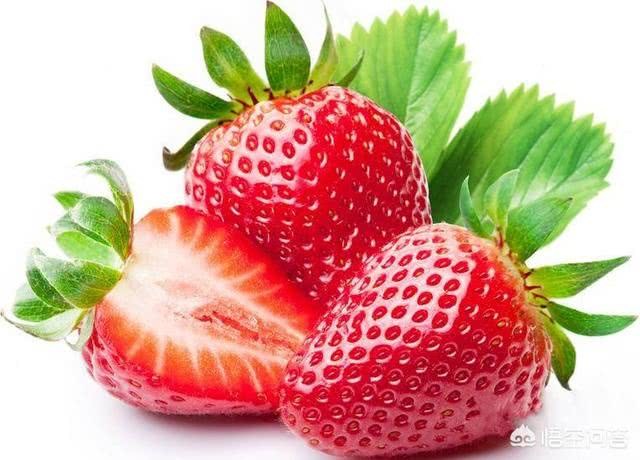
Are strawberries so fragrant and sweet because dye and hormones have been added? Although I have not engaged in strawberry cultivation, that does not stop me from discussing my own views based on my biological knowledge. First, the issue of dye: I do not agree with this, nor do I think such strawberries exist, and there is absolutely no need for it. Second, the issue of hormones: in agricultural production, the use of plant hormones is very common, and reasonable use of hormones will only make strawberries more fragrant and sweeter with better quality, and it is impossible to say they are harmful to the human body. Below I will discuss these two issues, hoping it will be helpful to you.
The dye issue
Some people see strawberries sold in the market that are bright red and very attractive, and think the red color comes from dye. And some people, when washing strawberries, find that the water used to wash them turns pinkish red, and think it may be dye coloring. In fact, such dyed strawberries should not exist. Friends who have bought strawberries should be fairly clear that strawberries have a very short storage time and spoil very easily. Even a slight bump will ruin them. If after harvesting the strawberries one were to soak them in so-called dye, aside from increasing costs and labor, the strawberries would also easily spoil due to bumps and be difficult to sell. Perhaps some might question whether merchants might inject dye into strawberries in the future? Likewise, this practice is truly very unwise. You can try injecting water into a strawberry at home with a syringe; someone has tested this, and it simply cannot be injected in, and once a strawberry has a break or opening, it will immediately rot. Surely no one would doubt this point.
Friends who grow melons and fruits should all be clear that during the fruiting stage, watering must be done very carefully; once the fruit is bumped, the fruit will drop flowers and drop fruit. In strawberry cultivation this situation is even more serious; after fruit set, they are protected very carefully.
When we buy strawberries and wash them at home, we find the water in the basin turns pinkish red. Actually, this is truly a very normal phenomenon. The pigments in strawberries are water-soluble, and during washing, bumps are unavoidable, so the pigments in the cells are released, and at this time the water in the basin also turns red.
Based on the above analysis, I believe that so-called strawberry dyeing is merely everyone's subjective speculation without solid evidence; at least so far I have not heard of any good dye that could make strawberries so bright in color. And a very key point is that if they were dyed, the overall color of the strawberries should be uniform and consistent, but judging from the color of the strawberries we buy, the color at the top is the deepest. This kind of variation in shade absolutely cannot be achieved by dyeing.
The hormone issue
The application of plant hormones in agricultural production is already very common, such as cytokinins, gibberellins, ethylene, etc., among which the more familiar one should be ethylene. In plants, ethylene is a hormone that can ripen fruit. Now many fruits, after ripening, are harvested early because they do not tolerate transport, and after being transported to the destination, ethylene is then used to ripen them before sale. For example, bananas, tomatoes, mangoes, etc. These are all very common applications. I ask you, after eating so many bananas, have you ever felt any discomfort in your body?
Plant hormones are substances completely different from animal hormones. Even if the human body consumes these hormones, they are harmless to the human body. This point has been mentioned by more than one expert, and the growth and development of the plant body itself are also governed by these hormones. For example, spraying cytokinins after strawberry fruit set helps the strawberry fruit enlarge; in fact, even without spraying cytokinins, fruit expansion is also promoted by cytokinins. It is just that by regulating plant auxin, people can make fruit set more uniform and help the fruit expand.
Based on the above analysis, Science Xingnong believes that whether it is the issue of dye coloring or hormones, neither is a problem. As for strawberries, perhaps saying that strawberries have high pesticide residues and paying attention to pesticide residues is understandable, but the so-called claim of strawberry dyeing is something I personally still do not quite agree with.
This article is originally created by Science Xingnong, taking you to grow knowledge together.