What are the profitability and market prospects of cherry cultivation?
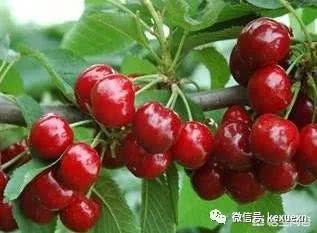
Everyone knows the saying "cherries are delicious but the trees are hard to grow," so the price of cherries has never been very cheap, but this does not stop people's love for cherries. Cherries are rich in nutritional value, very suitable for people to eat, and in recent years, with the continuous improvement of cultivation techniques, the quality of cherries has become even better, and market demand is also good. So what exactly is the profitability of growing cherries? Here, Xiaonong will discuss it with everyone.
1. Current status of cherry cultivation
Cherries are an early-spring fruit, giving them an advantage in fruit market timing. At present, the cherries relatively popular in the market are mainly large cherries (sweet cherries). The main production area of large cherries is in the Shandong region of China. The fruit is large and sweet in taste, not inferior in taste to imported cherries (chelanzi), but many people only recognize imported cherries, which shows that domestic large cherries have not done well enough in branding. In addition, not only are they very good in taste, domestic large cherries are also much cheaper than imported ones.
However, at present, cherry cultivation is relatively concentrated in Europe and America, and the cherry export industry in these regions is quite developed, while China's domestic cherry cultivation industry is still at a relatively backward level, with fruit quality, management, and the market all not yet fully developed.
2. Cherry market demand
The demand for cherries has been rising continuously over the past ten years, mainly due to people's continuously improving living standards, their growing awareness of the nutritional value of cherries, and the promotional effect of imported cherries entering the domestic market. However, because there are relatively few orchards in China growing cherries on a large scale, and because of planting technology and environmental issues, cherry yields are very uneven. High-yielding fields can reach 3,000 kg per mu, while low-yielding ones may produce only a few hundred kg. This situation in cherry cultivation is still far from meeting market demand for cherries.
3. Profitability of cherry cultivation
Some people will very directly ask how much money can be made from growing cherries. But whether you can make money, and how much you can make, depends on a combination of factors such as the grower's management skills, the local market environment, transportation conditions, and the quality of the saplings. Also, before planting cherries, capital investment must be made in advance. Generally, for a good land environment, the investment in cherry saplings is about 2,000 yuan. In a good situation, one mu of land can produce about 3,000 jin of cherries, but you also need to invest in manual picking. Management fees require about 3,000 yuan, chemical fertilizers and pesticides about 2,000 yuan, and land contract fees about 1,000 yuan. At present, the market price of cherries is around 100 yuan per kg, which depends on the quality of the large cherries. But this is the market price. The highest purchase price at the cherry orchard is only 60 yuan per kg, because cherries have a relatively concentrated market period, and if you miss it, the fruit will rot. An orchard with a yield of 1,500 kg (including lower-quality cherries) can sell for about 50,000 yuan. After deducting costs, it is about 40,000 yuan per mu. However, the above calculation method is only a personal view. If there is anything inappropriate, corrections are welcome.
The above answer about cherry cultivation comes from Science Xingnong. If you want to learn more about flowers or agricultural information, you are welcome to follow me or leave a message in the comment section. Thank you.