How to care for the Echeveria 'Chihuahuaensis' succulent? This care guide explains it all
Text
Image: Zhishajian
Jiwalian, Echeveria of the Crassulaceae family, alias: Jiwawa (because it is often confused with the dog, in most cases it is simply called Jiwalian), native to Chihuahua, Mexico, growing on slopes with good air circulation and abundant sunlight.
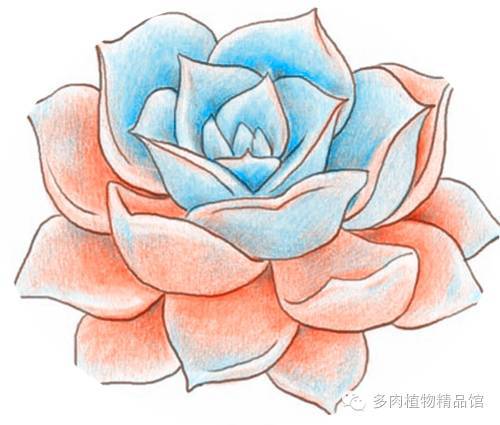
The plant is small, with a stemless rosette that is very compact. The ovate leaves are rather thick with a small tip, 4 cm long and 2 cm wide, blue-green and covered with a thick white powder, with a beautiful deep pink leaf margin. The inflorescence is 20 cm tall, curved at the tip, with small flowers about 1 cm long, bell-shaped, red.
Jiwawa likes a warm, dry and sunny environment, is drought-tolerant, does not tolerate excess moisture, and has no obvious dormant period.
Care Guide
1. Temperature. The Jiwawa succulent prefers a large temperature difference between day and night and rather warm weather. The minimum temperature should be kept above 7°C. When the winter temperature is rather low, it is better to keep it indoors.
2. Watering. The Jiwawa succulent is a drought-tolerant plant and should not be watered too much, so the amount of water must be well controlled; watering too much can easily cause waterlogging and lead to root rot. In summer, water only after the soil has dried out completely, and in winter the potting soil should be kept dry.
3. Soil. The growing soil for the Jiwawa succulent can generally be a mix of peat and perlite or a sandy soil with good air permeability, with some bone meal added as a calcium-containing material.
4. Light. The Jiwawa succulent prefers sun; in summer, just place it somewhere with good ventilation and plenty of sunlight, such as a windowsill.
5. Fertilizing. The Jiwawa succulent has a rather slow growth period, so it does not need much fertilizer; generally once about every 20 days is enough
6. Propagation. Early spring is a good time to propagate the Jiwawa succulent; you can pick off rather plump leaves and lay them flat, and they will quickly produce small shoots, then just slowly wait for them to grow into independent plants.
Leaf cuttings and stem cuttings are the main methods; because it grows slowly, leaf cuttings are a fairly common propagation method. Remove plump leaves and lay them flat, and they will soon take root and sprout, but it takes a long time to grow into an independent plant.
7. Cultivation techniques
Cultivation is not too difficult; when sunlight is sufficient, the leaves are arranged very compactly. In summer, reduce watering and provide appropriate shade, as too much waterlogging can easily cause rot. Because it grows slowly, the soil does not need to contain too many nutrients. It is fairly cold-tolerant in winter. Early spring is the most beautiful season for this variety.
PS: There are several reasons why Jiwawa's leaves become soft during care.
The first reason is overwatering. Jiwawa likes a cool and dry environment, does not tolerate moisture, and is afraid of waterlogging. So keep Jiwawa's growing environment dry and do not water frequently.
The second reason is insufficient sunlight. Jiwawa likes a sunny environment and is drought-tolerant. All things grow by relying on the sun, so place Jiwawa somewhere with plenty of sunlight.
The third reason is that the temperature is too low. Jiwawa should grow at temperatures of 15-20°C, and the temperature should not fall below 10°C at the lowest. In winter it should not go below 5°C.
Jiwawa's soil mix also needs to be nutritious; generally a mix of peat, vermiculite and perlite can be used, with an appropriate amount of bone meal added. You can also use a mixture of 3 parts leaf mold, 3 parts river sand, 1 part garden soil and 1 part cinder.
In summer, when temperatures are high, provide moderate shade, ventilation and water saving; during the winter growing period, fertilize generally once about every 20 days; propagation methods generally include division, cuttings and seed propagation.
The article was compiled by the Succulent Plant Boutique Hall; the copyright belongs to the original author. For some articles the source cannot be identified and they are marked as from the internet. If there is any infringement, please contact us immediately and we will handle it promptly.