When Does the Clivia Bloom? A Detailed Guide to Its Flowering Period
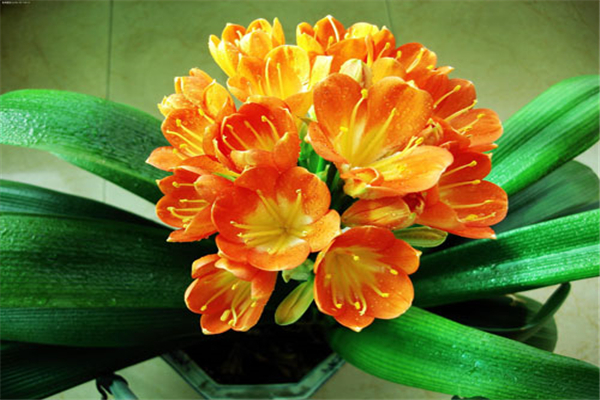
I. Blooming Time
Its growth cycle is particularly long, so most need four to five years of care before they bloom, which is to say it blooms once it has grown twenty to twenty-five leaves. If we cultivate it well, it can bloom in two to three years, and the time can even be shortened so that it blooms in less than two years. Of course, the plant basically blooms only once a year; if it is cared for very well, it may produce one or two more flower stalks. Some people may find during the growing process that it takes six or seven years to bloom, or that it blooms once and then never blooms again.
Its flowering period falls in the range of February to April, and there are ways to extend the flowering period: lowering the temperature, giving it ventilation, and reducing the light are the best methods.
II. Points to Note During the Flowering Period
1. Applying bone meal before it blooms, or using some soybean cake water, can make the flower color more vivid, the flowers larger, and the leaves thicker and more succulent; without this, the flowers will be very difficult to open. At the same time, nitrogen fertilizer needs to be kept under control, and fertilizers such as potassium and phosphorus also need to be applied, otherwise flowering will be affected.
2. Under strong light, its flowering period will be very short, but the flower color will be more vivid; conversely, under weak light the flowering period will be longer, but the color will be somewhat unattractive. Whether it is long-term strong light or long-term weak light, both will cause its nutrients to accumulate, thereby affecting its blooming.
3. Temperature also has a fairly large effect on it. If the temperature is too high, the root hairs will not live as long, and their absorption capacity will weaken, so during the flowering period the temperature should be kept between 15 and 20, so that the root hairs will live longer, the absorption of water and fertilizer will be much better, and the flowers will grow especially well.
4. During flowering, water it more, because at this time it has a relatively high demand for water, and the humidity requirement is above 60, but it must not be too high; above 80 will not do.
5. Flower stalk trapping (the flower stalk being caught between the leaves) should also be prevented; it is best to press the soil down firmly, then keep the temperature above 20, and do not let its soil become compacted; in winter the light should also be stronger.