What to Do When a Clivia Loses Its Leaves? Learn the Correct Way to Handle It
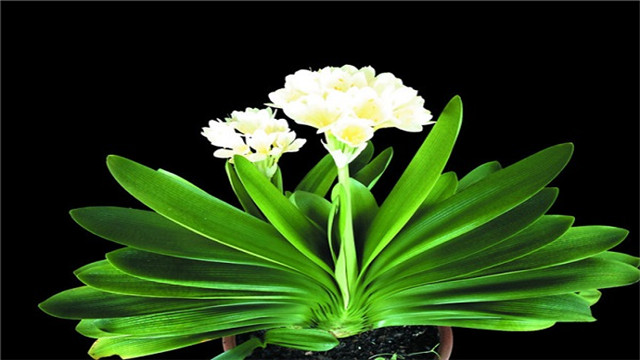
1. Light Problems
(1) Specific cause: This mainly refers to the intense light in summer, especially at noon. When it gets too much sun, its leaves may first droop and then may fall off later.
(2) Solution: When this happens, first check its growing environment to see whether the light is too strong. If it is, then move its position or shade it. Generally, getting light in the morning and late afternoon is enough. In winter, the light exposure time can be appropriately extended.
2. Temperature Problems
(1) Specific cause: This mainly refers to summer. If the temperature is too high and no cooling measures are taken, its leaves will easily fall off.
(2) Solution: First, ventilation is very important. Second, you can spray some water around the place where it is kept or on the plant's leaves. This can also effectively lower the temperature.
3. Fertilizer Problems
(1) Specific cause: The first possibility is too much fertilizer. The second possibility is fertilizer that is too concentrated. Both situations can cause the leaves to fall off.
(2) Solution: For the first case, you need to appropriately reduce the amount, especially when the temperature is above 25 degrees. For the second case, you need to apply light fertilizer, and it must never be too concentrated.
4. Water Problems
(1) Specific cause: If there is too much water and the waterlogging is severe, then the fleshy roots are very likely to rot. Then, the leaves may fall off.
(2) Solution: It is best to water again when the soil is half dry. Also, when watering, you need to water thoroughly. In addition, do not let water remain in the middle of the leaves.
5. Pest and Disease Problems
(1) Specific cause: There are many types of pests and diseases, such as leaf blight and scale insects, all of which can cause leaf drop.
(2) Solution: For different types of pests and diseases, spray the corresponding pesticides.