May is the golden period for growing succulents, so why is it also the time most prone to accidents?
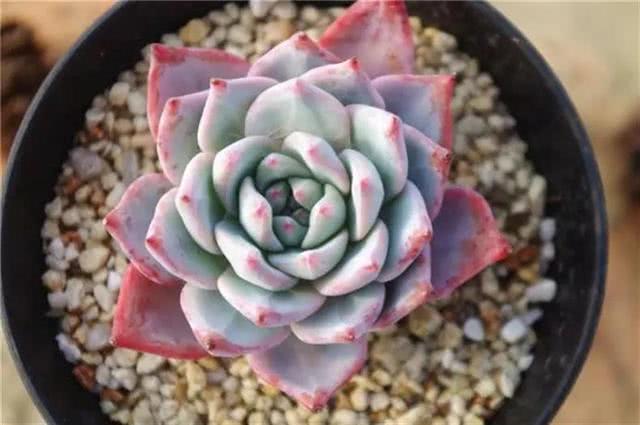
Have you all been like me lately, counting down the days on your fingers until the holiday... The May mini-holiday is here, and we can finally get some good rest. Of course, there's also good news for succulent growers: May is a fantastic golden period for growing succulents!
Before summer officially arrives, May has moderate temperatures, suitable day-night temperature differences, and plenty of sunlight, so outdoor-grown succulents easily develop their best colors. But precisely because it is such a golden period, growing succulents requires even more vigilance and no relaxation. Because during this time, besides succulents growing like crazy, it is also a period when pests and diseases occur frequently.
This is especially true for succulents grown outdoors. You are probably all familiar with succulent pests and diseases, but even a tiny mealybug can give you a terrible headache. Let's take a look below at how to avoid these "accidents" when growing succulents during the May golden period!
For the prevention and control of pests and diseases, prevention should be the main focus. Never think about locking the barn door after the horse has bolted once pests break out!!! The environment must be kept clean. Strict checks must be carried out on introduced plants, and they should only be placed in greenhouses, balconies, or other growing spaces once confirmed to be free of pests and diseases.
The three periods of early winter, early spring, and before the plum rain season are the times to spray succulents intensively, which can achieve twice the result with half the effort. In addition, disinfecting the growing medium has a very good preventive effect.
The commonly used pesticides mainly fall into two categories: fungicides for disease prevention and treatment, and insecticides, and the right remedy can be chosen according to the symptoms.
Below I will also share with you some experience on the prevention and control of several common succulent pests and on killing insects.
1. Mealybugs
Mealybugs must be the pest that gives succulent growers the biggest headache. Because the bugs are very small, they are not easy to spot when they first break out, but they reproduce quickly and ferociously, and they are also contagious.
So once discovered, they must be isolated and killed as soon as possible. If the soil was not treated with certain insecticidal and sterilization measures when potting, be on guard, because with suitable spring conditions, a large number of eggs may emerge from the soil and cause damage.
How to deal with mealybugs? Many succulent growers directly spray "Huhuashen" to kill them when they encounter the bugs, at a ratio of 1:2000; if the infestation is severe, 1:1500 is also fine, spraying continuously for three days.
When spraying, be careful and thorough, especially on the undersides of leaves and the roots and stems, to prevent some areas from being missed. Alternatively, you can drench the roots, but the effect is not as fast; once every one to two weeks will basically take care of it.
2. Fungus gnats
Fungus gnats break out especially easily in humid environments. Fungus gnats reproduce quickly; their larvae feed on fungi and algae in the soil, and later also gnaw on plant roots and juicy leaves, and can transmit fungi.
Adult females may even bite people. Despite their small size, they cause great harm, and they are very cunning: they quickly fly away when pesticides are sprayed, then return after the pesticide's effect wears off.
How to deal with fungus gnats? To kill larvae, you can use Xiaobaiyao, applied by root drenching or burying in the soil. For adults, you can use "Huhuashen"; after applying the pesticide, it is best to put a bag over the plant and place it outdoors to suffocate them for 1 or 2 hours.
3. Root mealybugs
Root mealybugs are even smaller than mealybugs, and they specifically suck sap from the roots, and they also break out quickly.
Sometimes succulent growers find that their succulents die for no apparent reason, and it is very likely the work of root mealybugs. Because they live in the soil, they cannot be found at all without carefully observing the condition of the succulents or turning over the soil. Usually, by the time you discover them, the soil has long been overrun by these little bugs.
To deal with root mealybugs, you can use "Jiebizhi", "Supusha", "Bayer Xiaolvwan'er", or "Furadan". These can kill root mealybugs, but they cannot kill the eggs. You can change the soil, trim the roots, and repot to eliminate the problem once and for all.
4. Red spider mites
Red spider mites are very small (less than 1mm), nearly round, good at crawling, and mostly dark red or purplish red in body color. They are not easily found by the naked eye; only small red dots can be seen. Once discovered, the damage is often already quite serious.
Red spider mites cause damage by sucking sap from inside the plant, which causes mottling and yellowing of the plant's epidermis, then turning it yellow-brown and rust-colored. Especially on vigorously growing tissues, such as stem tips or growth center areas, severe cases can become necrotic and rot.
Poor ventilation, dryness, and muggy heat all make red spider mite outbreaks extremely likely. Moreover, red spider mites develop quickly, have short cycles, and are highly adaptable, with more than 10 generations possible in a year.
To deal with red spider mites, you can spray acaricides (such as 25% pyridaben emulsifiable concentrate at 2500 times, or 5% nissol emulsifiable concentrate at 1000 times). Generally, for plants with severe pest infestation, spray 3-4 times per month, and rotate different types of acaricides to be effective.
Succulent growers must establish pest prevention awareness early, and not wait until pests break out to look for rescue measures! Usually, be sure to keep the growing environment ventilated!