Potted plants grown on a windowsill are like a flock of butterflies dancing in your home
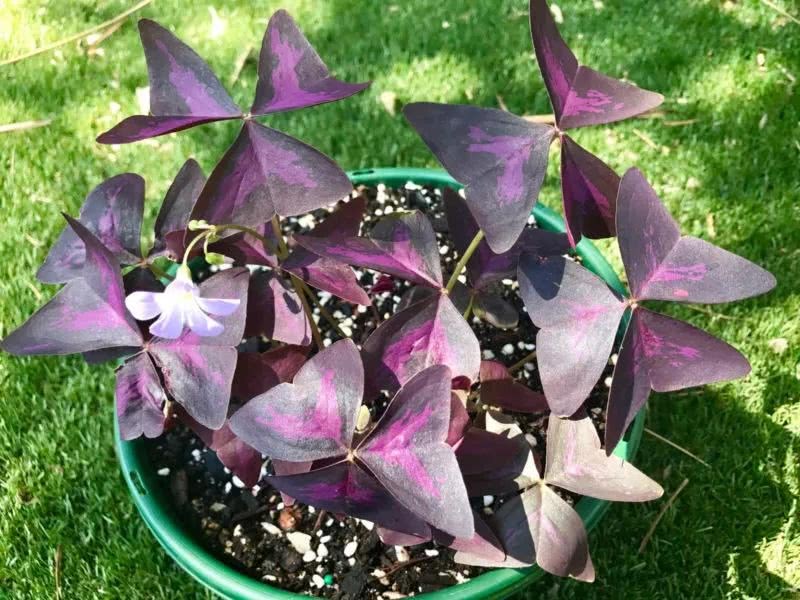
The plant I want to introduce to you below is called purple shamrock (Oxalis triangularis), and some people also call it just three-leaf clover. Its leaves look almost black, with purple markings at the center of the leaf, and sometimes they look like black butterflies, especially when grown on a windowsill and stirred by a gentle breeze, when they look like a flock of dancing butterflies.
Purple shamrock has a velvety appearance and looks very psychedelic. Growing purple shamrock is very easy. It is a succulent-type plant with a certain tolerance for drought, and it grows tubers one by one at the base of the rhizome, which keep dividing in the soil.
This plant is very suitable for growing indoors. It has good shade tolerance and does not need very much light, but it is quite sensitive to temperature. It is a tropical plant and afraid of the cold. Grown indoors, it needs a warm and humid environment year-round. If the temperature is too low, it is prone to frost damage, and if its tubers are frost-damaged, it is very hard for it to survive.
The appearance of purple shamrock is very peculiar. The leaves all look triangular, with three small leaflets combined into one large leaf, shaped a bit like a black butterfly. The flowers grow directly from the base of the rhizome, and the flower color is usually light purple or pink.
As a common indoor potted plant, purple shamrock should be grown in a semi-shaded spot, avoiding harsh sun or excessive direct sunlight, otherwise the leaves are easily scorched.
To grow purple shamrock, you must use well-drained soil. You can mix compost soil with pine needle soil or leaf mold and add an appropriate amount of perlite and sand, which will ensure good drainage.
Purple shamrock grown indoors as a potted plant does not need frequent care. It has relatively low water needs; just water it thoroughly once the potting soil has completely dried out. It also has relatively low fertilizer needs; just give it some organic fertilizer as a base fertilizer when planting, and there is no need to add much fertilizer later on.
In northern regions, when the temperature gets colder, purple shamrock will keep dropping its leaves and eventually the plant will wither. At this point, do not throw it away. As long as the tubers under the soil have not withered or rotted, it can sprout and root again. What you need to do then is stop watering, place it in a cool spot, and let it go dormant, cutting off all the stems and leaves above the soil, then water it appropriately once the temperature warms up again.
Purple shamrock is propagated by dividing the underground tubers. After spring warms up, you can dig it up, separate the tubers together with the roots, replant them in new soil, and keep them in shade with good ventilation and a warm environment year-round, and it will keep growing through all four seasons.
Some friends find that purple shamrock grows very long leaves in winter, which looks quite ugly. The solution is simple: after spring warms up, you can cut off the leggy leaves, and it will grow new leaves again.
Another thing to note is that when caring for purple shamrock indoors in winter, avoid overly dry air and maintain a certain humidity level. It is best to give it appropriate scattered light and control watering, which can prevent leggy stems and leaves and prevent red spider mite infestation.
Purple shamrock has another very interesting characteristic: in dark weather or after nightfall, its leaves droop down and slowly close, which is its state of entering dormancy at night. After daylight brightens in the daytime, its leaves slowly unfold again.