Orchid cultivation methods and precautions, an old man's practical experience shared
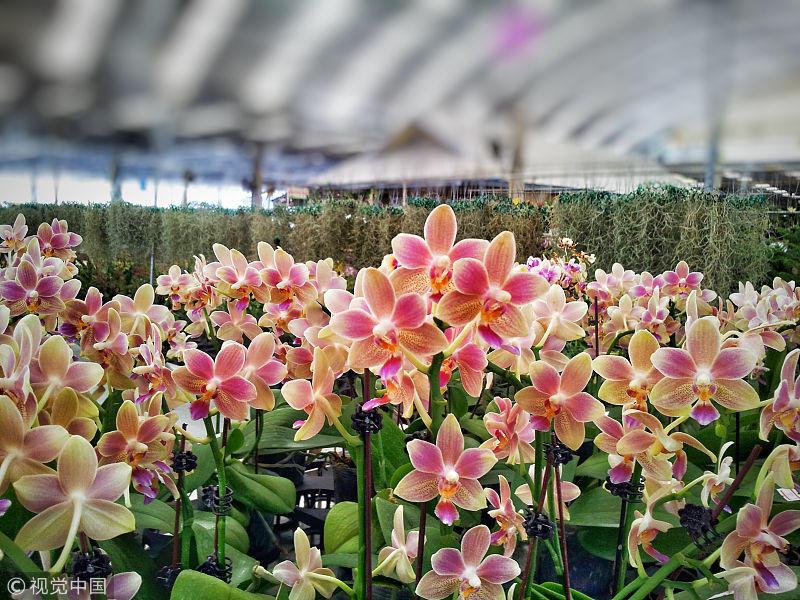
Orchids are famous Chinese flowers, and since ancient times growing them has been a profound field of knowledge. Many people think growing orchids is difficult and always regard them as extremely delicate plants. In fact, growing orchids really is not hard. At first I also thought orchids were difficult to grow, but through the guidance of an old man who had grown orchids for decades, I came to think that growing orchids is as simple as growing ordinary plants. Below I will introduce the cultivation methods and precautions for orchids.
1. Growing medium. To grow orchids well, the medium is important first of all. Orchid roots are aerial roots, very crisp and tender, and their growing conditions require good air permeability and drainage. Since ancient times there has been a saying that to grow orchids you must first grow the roots; when the roots grow well, both the leaves and the flowers will naturally be good. The medium can be a mix of granular potting medium and tree bark. For bark, pine bark, willow bark and the like are all fine; for granular potting medium, ceramic pellets, crushed brick pellets, volcanic stone and so on can be used. But such a medium only serves to provide air permeability and drainage, and contains no nutrients. At this point you can add some soft material to the above medium; for the soft material you can choose well-fermented peanut shells and leaf mold. No matter which medium you choose, you must ensure it is loose and airy. This is the essence of growing orchids well.
2. Watering. When watering orchids you can neither fix an amount nor fix a schedule; you should handle it flexibly according to the water retention of the medium and changes in the weather. But the general watering principle is: when the medium in the pot is dry, water it, and water thoroughly each time. However, with some media the surface looks dry while the medium inside is still wet, and in that case you need to wait another day or two before watering. As for the method of watering, it is hard for anyone to give a reasonable answer; this requires your own long-term continuous exploration and observation.
3. Fertilizing. Many beginners at growing orchids think that as long as they fertilize orchids with weak fertilizer frequently it does not matter, and this is the reason many orchid growers fail. Orchids are very sensitive to fertilizer and water. After transplanting, they must not be fertilized for at least a month. A newly transplanted orchid needs a period of time to recover and adapt, and fertilizing at this time will certainly kill it. Fertilizing should wait until one month after transplanting, and it should be weak and little; it is best to use fertilizer specially made for orchids.
4. Growing environment. Orchids kept at home are generally grown indoors. When grown indoors they should be placed in a bright spot, ideally where they can receive indirect light. If the light is insufficient, the photosynthesis of the leaves weakens, resulting in insufficient nutrients being produced, which makes the branches and leaves thin and weak and hinders bud formation and flowering. Good ventilation of the environment is an indispensable environmental factor for orchid growth. Ventilation can increase the photosynthesis of the leaves and also reduce the occurrence of pests and diseases. If the environment in which orchids grow is dry and the temperature is low, this is extremely unfavorable to orchid growth. Therefore, you should increase the humidity in the air by sprinkling water, misting and other means, to prevent a dry environment from harming the orchid plants.