The real king of wild vegetables grows in a fairyland, yet is often mistaken for bracken
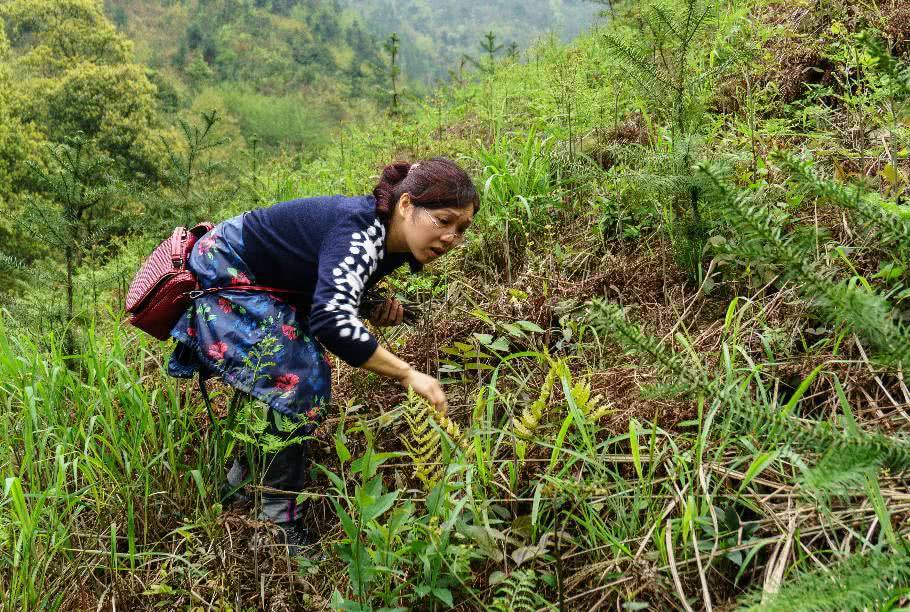
In Yunnan, China, there is a unique wild vegetable that grows in the high mountains at an altitude of over 2500 meters along the China-Vietnam border, where clouds and mist swirl year-round, vegetation is dense, summers are not hot, winters are not cold, and temperatures are stable. On top of that, the mountains are full of towering trees, and the ground is covered with thick moss. It is rarely visited by people and far from cities and pollution, making it a veritable fairyland. You can imagine how delicious a wild vegetable grown in such a "fairyland" must be, but unfortunately too few people know about it.
This wild vegetable is called "Yunlong vegetable." The name sounds like a person's name from a TV show, yet when applied to a wild vegetable it has a transcendent, refined feel, perhaps because the place where it grows is a fairyland, so it does live up to the name. In the eyes of the locals, Yunlong vegetable grows among the high mountain clouds and mist, absorbing the spiritual energy of heaven and earth and gathering the essence of the sun and moon, making it the true "king of wild vegetables." Every year during the Yunlong vegetable harvest season, people go up the mountain together to pick it, mainly in spring, and it is a supreme delicacy of spring.
Although the folk sayings of Yunnan carry a hint of self-praise, the nutritional value of Yunlong vegetable is indeed very high. It contains 18 kinds of amino acids, protein, pterosin, pteroside, and other compounds, as well as trace elements rarely seen in other vegetables, such as germanium, selenium, strontium, and molybdenum, making it a purely natural green food. Modern medicine holds that the vegetable compounds in Yunlong vegetable have a certain ability to inhibit bacteria and have detoxifying and sterilizing effects, while the cellulose in Yunlong vegetable can also increase intestinal peristalsis, cleanse the intestines and eliminate toxins, promote both urination and defecation, and enhance the human body's resistance to disease.
However, Yunlong vegetable is often mistaken for bracken because their appearances are extremely similar, and laypeople find it hard to tell them apart. The biggest difference between Yunlong vegetable and bracken is their place of origin. Yunlong vegetable is unique to the high mountains of Yunnan, and only what is produced in Yunnan is called Yunlong vegetable, while bracken is distributed throughout the country. There are also subtle differences in their appearance. Yunlong vegetable has slender stems and the leaves at the top do not curl, with most being green in color, while bracken is generally purple or green with purple, with the top curled into a round shape and thick, sturdy stems.
Yunlong vegetable has a long history of being used in cooking. It is recorded in the "Book of Songs, Odes of Shao and the South": "We ascend that southern hill, and there gather Yunlong vegetable." This shows that it was already a well-known wild mountain vegetable in ancient times, and the ancient methods of eating it have been passed down to this day, mostly boiling it in water and drying it in the sun to eat as a dried vegetable. Nowadays it is almost always used in cold dressed dishes, and can be prepared with meat or without, tasting fresh and delicious, better than bracken. Many people have eaten bracken, but many have probably never eaten Yunlong vegetable!