10 climbing flowers that bloom for 300 days once they open; plant one and you will be hooked
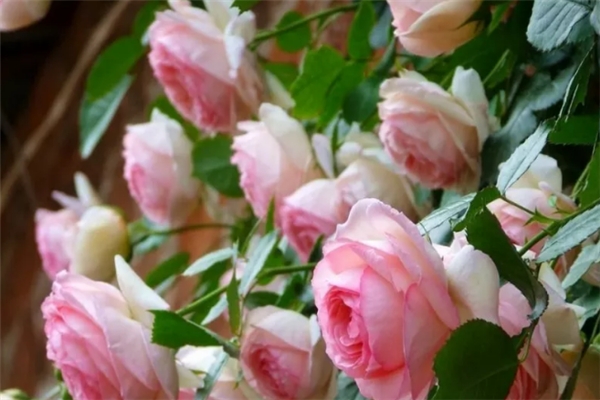
Eden Rose 85 (Pierre de Ronsard)
Eden Rose 85 is the "original internet-famous" among European roses. It has a long flowering period, blooms abundantly, and reblooms easily. The key point is that it is relatively resistant to pests and diseases, so it is absolutely the first choice for a flower wall.
1. Light: Eden Rose loves light, and only sufficient light can guarantee flowering. A yard, rooftop, or south-facing balcony are all very suitable for growing it.
2. Pruning: During the growing period, focus on thick, strong branches and cut off thin and weak branches. After flowering, cut off spent flowers and blind branches to ensure the next bloom.
3. Pests and diseases: Besides professional pest and disease treatments (Huhuashen, Aichuman, carbendazim, etc.), you can also make homemade garlic water or chili water (1:500) to wipe the affected leaves, and place sticky traps among the flowers to catch flying insects~
Clematis
Clematis is a "new favorite" for flower growers in recent years. It has many varieties, few pest problems, fast growth, and abundant blooms. Its flowering period is from March to September, and give it a trellis and it will cover it completely!
1. Light: It loves light and is very suitable for open-air planting. A south-facing balcony also works, and it climbs walls very quickly.
2. It likes water but fears waterlogging: With many flowers it likes water, but its roots also fear moisture, so grow it in loose, breathable soil (just mix flower soil with granules). During the growing period, water once every 2-3 days, and during the flowering period, water every day.
3. Support: Its vines are relatively thin, so give it a support to guide its growth. Grown on a balcony, it will immediately cover the windowsill, and passersby will all enjoy the sight.
Blue hydrangea (blue snowball)
Among hydrangeas, both blue and white hydrangeas can grow along walls, looking no different from climbing flowers. The flower heads are large and the colors are dreamy, and everyone who sees them praises them!
1. Cuttings: You can take cuttings by cutting branches and inserting 6-10 cm stems directly into soil, keeping them warm and moist (or directly soaking them in rooting water). They root in about 5-8 days.
2. Light: Unlike ordinary hydrangeas, blue hydrangea is not afraid of sun exposure, so there is no need to worry about it wilting in the sun. Just grow it freely.
3. Soil: Choose acidic soil: leaf mold, peat soil, etc. mixed with granules (ceramsite, vermiculite, etc.) to maintain nutrients and breathability. This way, even daily watering will not cause waterlogging.
Japanese honeysuckle
Everyone is familiar with Japanese honeysuckle. When Huahua was little, there was a super large Japanese honeysuckle at home. It bloomed from early spring to summer every year, and after a spring rain its fragrance was unmatched.
1. Environment: Japanese honeysuckle is almost not picky about its environment. Just do not forget to water it when it needs watering (when should you water? When the soil is dry, or water once every 2-3 days).
2. Fresh and ready to eat: The flower buds of Japanese honeysuckle can be picked and made into cold dishes, fresh flower cakes, or porridge. I wonder if your family has such a tradition?
3. Medicinal use: Everyone knows Japanese honeysuckle is a traditional Chinese medicine, right? It is cold in nature and sweet in taste, with the effect of clearing heat and detoxifying. Huahua's family often keeps it on hand as flower tea~
Chinese trumpet creeper
Chinese trumpet creeper has a nice name and is easy to grow. In fact, many people are familiar with it but just cannot name it. It is a common wall-climbing flower.
1. Light: It can be planted on a sunny side or a semi-shaded side. It will not be limited to one wall, and it can quickly cover all four walls. Its growth power is very strong.
2. Soil: It likes acidic soil with good breathability. Generally, leaf mold and the surface soil of a vegetable garden are both fine, and you can mix in some granules (grit, nut shells, peanut shells, etc.).
Morning glory
After seeing so many lush flowers, do you still remember the simplest morning glory? The morning glory full of childlike innocence, does it not also brim with memories?
1. Sowing: When the temperature is above 18 degrees, you can scatter the seeds in moist soil and wait quietly for them to sprout. With a history of more than a thousand years, it can sprout in 3-5 days, with a very high germination rate, and it climbs walls in 1 month!
2. Daily care: Just sprinkle water every day. The flowers open in the morning and wither in the evening, but do not worry~ it has super many buds, and from May to October, it can bloom every day.
Boston ivy
Speaking of climbing vines, how can we not mention Boston ivy? Although it rarely blooms and is generally grown only for its foliage, how can we let down this lush greenery?
1. Propagation: Boston ivy has super strong vitality. Sowing, cuttings, and layering all work. As long as you want to grow it, you can succeed!
2. Open-air growing: It is generally grown outdoors, and once established it relies on nature. Let it climb freely, and it can grow into a whole patch. Inside and outside the window, it is all scenery.
No matter whether the wall is old or new, tidy or not, it can give you the enjoyment of a painting.
Passionflower
Huahua tells you: passionflower is passion fruit, haha. Growing flowers and satisfying your appetite at the same time, of course Huahua recommends it.
1. Region: It is suitable for growing in the south, so that you can harvest sweet fruit. Grown in the north, you can only enjoy the leaves and flowers, and you will not get fruit.
2. Fertilizing: Because it needs to bear fruit, give it sufficient fertilizer. Farmyard manure and compound fertilizer are both fine. Do not be fooled by how expensive passion fruit is; it is actually very easy to grow.
Mucuna birdwoodiana
Mucuna birdwoodiana is a very tough climbing flower. It is tolerant of shade and drought. At first glance it looks a bit like Boston ivy, but once it blooms, you will immediately recognize it.
1. Propagation: Sowing in spring and autumn, or taking cuttings from branches, both work. Because it is shade-tolerant and drought-tolerant, you do not need to worry about watering or sunlight. It is 100 points worry-free.
2. Flowering: Mucuna birdwoodiana blooms abundantly and with large flowers. In the early stage, you can add some farmyard compound fertilizer to ensure that the flowers astonish everyone.
Wisteria
Speaking of climbing flowers, how can we not mention wisteria? Huahua just saved it for the grand finale. Dreamy, romantic, colorful... every time I do not know how to describe it.
1. Habits: It can be grown in the open air or in a semi-shaded position. It likes moisture, so water according to the size of the plant. Just keep the soil slightly moist. However, it is generally also grown outdoors relying on nature, and it still grows quite well.
2. Overwintering: Wisteria's flowering period is from March to June. In winter, when all its leaves have fallen, it looks ugly. Do not think it has died. It is actually just dormant. No need to manage it, and it will bloom again the next year~
After seeing these climbing flowers
Are flower lovers already itching to try?
Whether you have a courtyard or a balcony
If you like them, grow them