Want your aloe to grow side shoots? First, understand aloe's growth habits and propagation methods
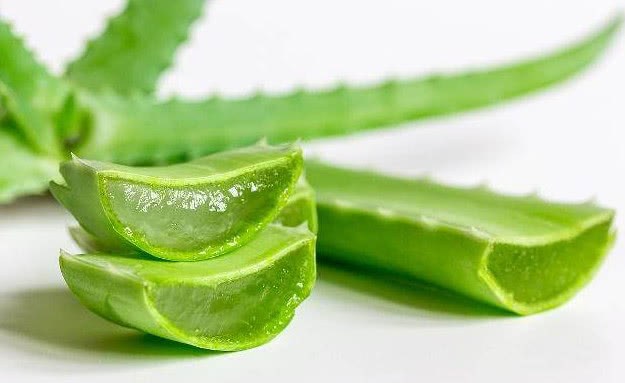
Aloe (scientific name: Aloe vera), genus Aloe, is a perennial evergreen herbaceous plant in the Liliaceae family. Its leaves are clustered, large and fleshy, arranged in a rosette or borne at the top of the stem. The leaves are usually lanceolate or short and broad, with sharp tooth-like spines along the edges. The inflorescence is umbellate, racemose, spicate, paniculate, etc., in colors of red, yellow, or with red spots, with six petals and six pistils. The base of the perianth is mostly fused into a tube. Aloe is a perennial evergreen herbaceous plant in the Liliaceae family, native to the Mediterranean and Africa. Aloe's leaves are fleshy, its leaf spines are firm, it stays green year-round, and its form is vigorous, giving it excellent ornamental value. It is also easy to grow, and if grown well, it will produce many side shoots and readily fill out the pot. Below, Science Xingnong shares with everyone how to make aloe grow more side shoots.
Growth habits: Soil: Aloe prefers good water and air permeability, high organic matter content, and a pH of 6.5 - 7.2. Light: It likes light, tolerates partial shade, and dislikes direct sunlight and excessive shade. Temperature: The suitable growing environment temperature is 20 - 30 °C, and the optimal nighttime temperature is 14 - 17 °C. Below 10 °C it basically stops growing, and below 0 °C the aloe's leaf pulp freezes and all wilts and dies. Water: Aloe has a strong drought resistance; aloe removed from soil can be kept dry for several months without dying. During the growing period, aloe needs sufficient water, but it does not tolerate waterlogging. Ecological environment: Aloe's ecological environment (air, water, soil, etc.) must not be polluted; pay attention to ventilation. Aloe needs not only nitrogen, phosphorus, and potassium, but also some trace elements. To ensure that aloe is a green, natural plant, try to use fermented organic fertilizers, cake fertilizer, chicken manure, and compost. Vermicompost is even more suitable for growing aloe. Aloe is generally propagated asexually through techniques such as dividing seedlings and transplanting, or cuttings. Asexual propagation is fast and can stably maintain the variety's excellent characteristics.
Propagation methods:
Division method: In the rhizosphere of aloe and among the leaf axils of the aboveground stems and leaves near the soil surface of the pot, some shortened, lotus-shaped short branches often form, known botanically as offsets. Aloe offsets can have their own adventitious roots and themselves have the ability to absorb soil moisture and nutrients, so after separating them from the mother plant, they are relatively easy to survive. Division propagation can be carried out throughout aloe's entire growing period, but the temperature conditions in spring and autumn are most suitable. Carrying out division propagation during this period allows aloe seedlings to green up relatively quickly and results in a high survival rate.
Cutting method: Cutting propagation makes use of the characteristic that the lower ends of aloe's rootless main stem and side branches can produce adventitious roots to propagate new plants. This is especially suitable for aloe varieties with well-developed branching and stem nodes that easily elongate. After removing the terminal bud, the side shoots develop rapidly, and the many branches that grow can be used as cutting material.