Pneumoconiosis complications progress rapidly, never take them lightly
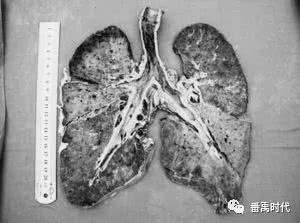
People prone to pneumoconiosis have no special interfering factors such as dust in their work or living environment; in ordinary life, it is mainly indirect or direct smoking, and whether smoking or being indirectly exposed to smoke, the frequency and concentration are both quite considerable. Some nicotine addicts mostly smoke several packs a day, and the people who live or work with them also inhale smoke constantly, just like nicotine addicts.
Because smoke accumulates without interruption, the body's immune resistance remains in an active state of eliminating and clearing foreign matter for a long time, and lung inflammation may thus continue endlessly. A high concentration of dust in the work environment is also equivalent to smoking, with dust constantly accumulating in the lungs and inflammation occurring; this is in fact already a complication, but this phenomenon is generally not called a complication.
Only when other obvious conditions such as pneumothorax, pulmonary tuberculosis, bronchial asthma, pleural mesothelioma, emphysema, cor pulmonale, pulmonary fibrosis and lung cancer appear amid repeated inflammation is it called a complication. If one smokes directly or indirectly and does not leave work environments such as dust, it can be said that complications like pneumothorax and pulmonary tuberculosis may occur at any time.
The proportion of such complications is also quite high. For example, patients with silicosis are more prone to pulmonary tuberculosis than ordinary people; if pneumoconiosis patients smoke indirectly or directly, or asbestos workers, that is, patients who already have asbestosis, they are prone to complicated pleural mesothelioma, lung cancer and so on; patients with advanced pneumoconiosis, because the airways become increasingly narrow and ventilation resistance increases, are prone to complicated cor pulmonale, obstructive emphysema and so on. Therefore, once pneumoconiosis is found in an examination, active treatment and elimination of the cause are necessary to prevent complications.