Complete Record of the High Air Layering Technique for Japanese Cedar Bonsai
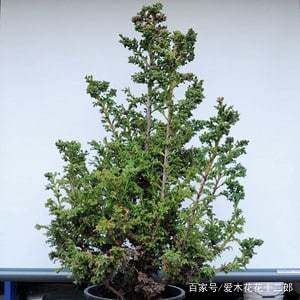
Air layering is a propagation technique often used in gardening. It is simple to do, and has one advantage: the roots that grow are radial. With one healthy tree you can have a continuous supply of bonsai material. There is far too much related material out there, so today let us look at a process of propagating Japanese cedar (Cryptomeria japonica) by air layering. Trees of the cedar type grow fairly fast and have soft branches; in fact, personally I feel they are not really suited to being made into bonsai. But nothing can stop a bonsai artist.
On this Japanese cedar the trunk is not very visible. But the branches are thin and long, and basically all of them are going to be cut off. Before cutting them off, if you can do some air layering to propagate a few, you could call it making use of waste.
Choose a suitable position.
Make the cut; the knife must be sharp, and the cut must be made very flat.
Scrape away the cambium.
Find a sheet of plastic.
Wrap the lower end of the plastic sheet around a certain distance below the cut, and tie it firmly.
Stuff in wet sphagnum moss.
Once it is about filled, tie the sphagnum moss tightly with aluminum wire. This is good for root growth.
Then tie the top end tightly as well.
Check on it regularly; if you find there are already a lot of roots inside, you can consider cutting it off and transplanting it.
After several months of waiting, the time for transplanting has arrived.
The root system is not bad, and the whorled effect is very good.
So cut it off.
Find a pot and plant it in. Beautiful.