Half a Lifetime with Fish
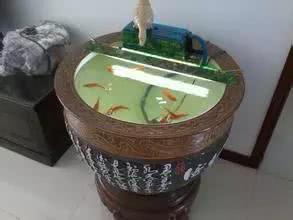
I have loved fish and their scales since childhood. As a boy, I kept goldfish in earthenware vats and guppies in washbasins, and later I kept oscars, arowanas and the like. Now I am middle-aged, and counting on my fingers, all kinds of fish have accompanied me through half a lifetime.
Recalling my childhood, there was a water storage vat in our courtyard. When the elders caught a small carp or two in the river bend, they gave them to me. Overjoyed, I begged my parents to put them into the water vat. But to keep the stored water from spoiling, my parents would not allow me to feed them. Once in a while I secretly dropped in a crumb or two of steamed bun, and watching the fish eat made me enormously happy. They had little food, yet they lived long in that vat. I did not understand why, but from this I learned that fish cannot be starved to death.
Article illustration, from the internet
By the time I was in primary school, in summer there were vendors pushing carts of guppies outside the school gate. Back then I did not yet know their name and simply called them tropical fish. With the few jiao of New Year money I had, I bought several and rushed home to put them in a basin and start raising them eagerly, and, copying the old man next door, I went to the river bend to catch bloodworms to feed them. After a month or so, the fish had actually bred many fry, and I felt a great sense of achievement. By the winter months, the cold room, which had no heating in those years, made the fish I had raised all summer gradually die, and I can still recall the sorrow of that time.
Article illustration, from the internet
At that time, my greatest dream was to have a round glass tank. Carrying this wish with me, by the 1990s, when I had started working, I found a glass shop and had them glue together a rectangular tank half a meter long. By then there were already specialized markets for flowers, plants, fish and insects, with simple filter boxes and heating equipment, so I started out keeping a few oscars, buying miscellaneous small fish to feed them.
Later still, after I married and had children, with more disposable money in hand, I bought a Jebo acrylic all-in-one aquarium and kept silver arowanas... At that time the internet was not as widespread as it is now. My limited fishkeeping knowledge came from fish sellers or from hunting around websites; when I found valuable content, I printed it out and bound it into booklets. Even more, I bought all kinds of ornamental fish books in bookstores, including knowledge on farming edible fish.
Nowadays, all kinds of specialized ornamental fish supplies are available, filtration systems come in countless varieties, and many large aquariums greatly satisfy the needs of aquarists. Even more convenient is that fishkeeping knowledge is shared online, enabling many newcomers to ornamental fish keeping to quickly become experts. But amid such high-speed sharing of information, videos and experiences, and while more and more hardcore hobbyists make large investments, can we, under the noisy drive of profit and vain comparison, ever think about what fishkeeping brings us beyond ornamental value? What has it benefited us with?
There is a saying in fishkeeping: to keep fish, first cultivate the water. Extending from this, what these many years have given me is this: "To keep fish, first cultivate the water; to cultivate the water, first cultivate the heart." This can be understood from several aspects: first, patience; second, insight; third, moderation.
Patience
Among the fish I have personally kept, my favorites are arowanas and flowerhorns. This is not entirely because these fish are precious, but because I feel these two kinds can interact with people to the greatest degree during the keeping process. However, because flowerhorns have short lives and many illnesses, I do not touch them much. Arowanas, on the other hand, carry the Chinese people's auspicious "dragon totem" factor, and together with their own large, brilliantly colorful scales and their winding, graceful body shape, they greatly attracted me.
Article illustration, from the internet
But keeping this fish is a great test of our patience. Every time a young arowana first enters the tank, the tests come one after another. First comes a long refusal to eat. If the water quality is poor and the environment bad, various problems such as lying on the bottom of the tank or crashing into the tank appear. Recalling how frantic and impatient I was then, blindly using every method, often backfired, adding other illnesses and bringing greater trouble. Thinking about it now, what we should do is "stay calm in the face of crisis," methodically change the water, add oxygen, and keep water quality and the environment stable, waiting only for everything to adapt. Let nature take its course and all will be well.
Article illustration, from the internet
The second way an arowana tests its keeper's patience is the color development process. From the beginning I have kept only young arowanas, enjoying the sense of achievement of this process. But truly facing a yellowish fish day after day for a long time, my eager desire for the fish to turn deep red is often hard to suppress. One year, two years, when your patience has been ground down to almost nothing, the fish dramatically changes within a few months. And at that moment, I understand that what I have gained is not just a beautiful red arowana, but more importantly a lasting, ordinary heart that does not rush to show off and does not blindly compare.
Insight
Today's ornamental fish supplies can be called endless in variety. The drugs used solely to adjust water quality and fish condition alone number in the dozens to hundreds. Once you keep fish, you want to give them the best, and you urgently want the fish to grow into the best condition and strongest build, to show off your own fishkeeping skill.
Article illustration, from the internet
I once blindly pursued the internet-favored "air tank," and once gave my fish many kinds of nutritional products. All these things, however, did not achieve the results I wanted, and because of improper use, occasionally caused some illnesses and disorders. Later I thought of an old saying: water too clear has no fish. Once a fish enters the tank, although it is the main character in the tank, in the tank's filtration ecosystem it, together with the hidden anaerobic bacteria, aerobic bacteria and so on, is one link that keeps the system stable. Like two sides, as one waxes the other wanes; neither can be overemphasized, otherwise it will only lead to symptoms such as insufficient immunity in the fish and dependence on nutritional products. Applied to people and affairs, one should start from the overall situation and consider everything as a whole, so as to avoid oversights.
Moderation
When first learning the basics of fishkeeping, one is often troubled by details, such as the amount of water changed and the interval between changes, the amount and duration of lighting, the cleaning cycle of filter media, the water's PH value, TDS value and so on. All these things left me dizzy and at a loss, and when I asked various people, their answers differed. Several times I changed water twice a week as usual, a quarter each time, but because the fish density was relatively high at the time, water quality gradually developed problems, so I nervously increased the frequency of water changes.
Article illustration, from the internet
Once the water quality was good, I gradually understood a principle: in all things one must not rigidly stick to the letter and be blindly bound by data. The so-called amount of water changed must be adjusted according to the size of the water body, the number of fish, the frequency of feeding and other aspects. Others, such as lighting, must be determined specifically according to the fish species, the keeping environment and the K value of the light. This is also like how people conduct affairs: it stresses the word "moderation." If you fail to grasp it, going too far is as bad as not going far enough, and extremes reverse themselves; but if you grasp it well, everything goes smoothly and you get twice the result with half the effort.
Having kept fish as companions for decades, though it has consumed energy and money, it has also given me a state of mind. There is the diligent heart of feeding and changing water day after day, and the tranquil heart of admiring the fish in leisure time. The greatest gain is none other than cultivating an ordinary heart. The fish will keep swimming by my side, accompanying me as I cultivate myself and my heart, and unravel more principles of how to conduct myself and handle affairs.
Editor's note: After reading the article carefully, the editor was deeply impressed by this fish friend's writing and thoughts. Admiration, admiration!
[Statement: This article comes from Longyu Zhidian, and the copyright belongs to the original author. If your rights are infringed, please leave a message to contact us for deletion.]