Key points for succulent care in May - save this in advance. After May Day comes the Start of Summer.
Succulent beauty photos | Care experience | Chasing dreams and building gardens | Hand-drawn DIY
Author: Yushan / Compiled by: Succulent Plant Atlas
(please indicate the source when reposting)
Now the main text begins:
Village Chief's ramblings: When today's Taobao livestream ended, many friends said to me, "Happy May Day." At the time I was puzzled - hadn't May Day not arrived yet? After I got back and checked, I realized the May Day holiday really had already begun! Some of the succulents placed in the courtyard hadn't enjoyed enough of spring's beauty before they were about to face the devilish summer again? Heartbroken~~
After May Day, the "Start of Summer" soon arrives, so it is time for us to consider some topics related to getting through the summer. Today I am sharing with you the succulent care monthly calendar compiled by the great Xianzhen expert @Yushan. It covers a very comprehensive range of families and genera, and is a good reference for beginners; but there is no absolute standard. Everyone still needs to adapt to local conditions and learn from the useful parts, and cannot copy it completely~
Main text: In May, at the end of spring and the beginning of summer, the temperature is suitable, the temperature difference between day and night is large, and the sunshine duration is long, creating favorable conditions for the growth of succulents.
Among them, "summer-type" succulents have generally reached their peak growing season. Many species such as the Cactaceae's Echinocactus grusonii, white-thorned cactus, golden dragon, and beautiful flower angle all bloom this month;
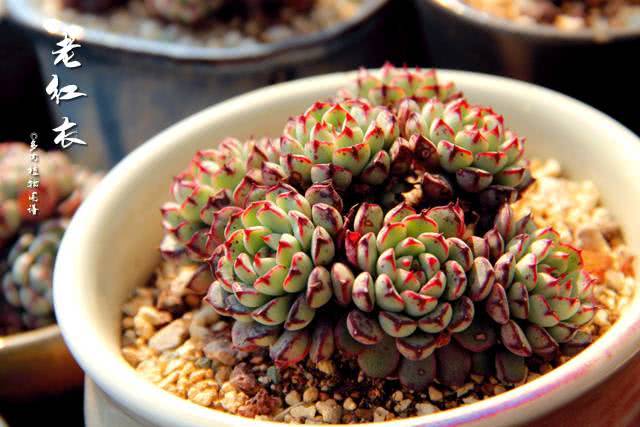
The Crassulaceae plants that grow in spring and autumn, such as Echeveria, black mage, tube-leaf flower moon, and sunset goose;
The Aloaceae's "intermediate-type" succulents such as the lying ox, dinosaur, and certain varieties of Haworthia are also growing vigorously;
While the Aizoaceae's living stones, bulb, spring peach jade, damask jade, and Anzhen;
The Crassulaceae's Sentony, moonlight, snow lotus, and Dongyun, and the Dioscoreaceae's South African turtle-shell vine;
The Hyacinthaceae's "winter-type" succulents such as tuberous Haworthia, scale celery, spring grass, broad-leaf spring grass, and Buddha's seat hoop grow slowly due to rising temperatures, and in the hotter southern regions even stop growing. Therefore, this month's succulent care should be carried out according to different types.
Light:
"Summer-type" succulents such as the Agavaceae's Huishan, armor crab, Thor, as well as Echinocactus grusonii and golden ball, and "intermediate-type" succulents such as the Crassulaceae's sunset goose and firethorn can be placed outdoors in a sunny place for care. This can make the plants sturdy and the colors beautiful. If there is insufficient light, the plants will become leggy, resulting in a loose plant shape. For some varieties with red or yellow markings on the leaves, the colors will become dull or even disappear.
Varieties with white powder on stems or leaves, such as the dragon god tree, are best kept indoors all year round, otherwise wind and rain will cause the white powder to come off, affecting their ornamental value.
"Intermediate-type" varieties such as the Aloaceae's jade dew, winter constellation, and Ruihe can be appropriately shaded to avoid strong sunlight burning the leaves and affecting growth, but they should not be too shaded either, lest lack of light causes a loose plant shape and brittle leaf texture that breaks easily;
"Winter-type" varieties such as living stones, ten-thousand elephants, jade fans, and snow lotus can be placed in a bright place without direct sunlight for care. Plants kept indoors should be noted for good ventilation, so that the stuffy hot climate does not steam your beloved succulents. Those outdoors should avoid prolonged rain, otherwise water accumulation in the pot soil will cause root rot.
Watering:
For varieties in their growing season, the soil should be kept moist, but water accumulation in the pot soil should be avoided to prevent root rot; however, it should not be too dry either, otherwise long-term drought and lack of water in the pot soil will not kill the plant, but will cause slow growth or even stop growth, shriveled leaves, and loss of luster, seriously affecting ornamental value.
When watering, be sure to water thoroughly. It is best if the water can flow out through the drainage holes at the bottom of the flowerpot. This can wash away salts in the soil, preventing them from sticking to the root system and affecting plant growth, and in severe cases causing root rot.
For "winter-type" succulents about to go dormant, such as living stones, Diyu, snow lotus, Dongyun, ten-thousand elephants, and jade fans, although plant growth has not completely stopped, it is very slow and requires little water, so watering should be appropriately controlled and the pot soil kept semi-dry.
Aloaceae Haworthia plants and certain varieties of cactus plants have certain requirements for air humidity. When the climate is dry, pay attention to spraying water on the plants to increase air humidity, so that the colors are fresh and moist.
Fertilizing
Growing "summer-type" succulents can be fertilized according to different varieties; "winter-type" ones about to go dormant should stop being fertilized.
Even for the same type of succulent, whether to fertilize should be chosen according to different varieties and differences among individual plants. In short, fast-growing plants should be fertilized more, while slow-growing ones should be fertilized less or even not at all.
This month, "summer-type" succulents can also continue to be repotted, and division propagation, cuttings, grafting, and seed propagation can be carried out. For certain flowering Cactaceae plants, artificial pollination can also be done for breeding.
The climate this month is suitable, and pests also begin to become active. Attention should be paid to prevention and control, and the ventilation conditions of the cultivation environment should be improved to prevent plants from developing abnormal yellow spots, black spots, brown spots, and other physiological diseases due to infection by pathogens. If found, fungicides should be sprayed promptly for prevention and control, so as not to expand the scope of infection.
Village Chief's ramblings: Since the revision of submission payment, we have received strong support from many netizens, and the quality of posts has also improved noticeably. May Day is coming soon, so everyone can refer in advance to the previously established rules [Submission gift package upgraded luxuriously again! Volunteers who help recommend high-quality articles can also receive fine small expensive goods!] Priority selection of one succulent you like (in addition, the Village Chief will still randomly include selectable succulents as small gifts). For how to receive, please private message WeChat ID duoroutupu2017 or duoroutupu2018
Essay themes: care experience in your local environment, inspirational comparison records, watering and shape control, repotting and soil mixing, garden stories, etc. Find your audience here!
Publishing platforms: WeChat public account, Toutiao, Taobao Toutiao, Tiantian Kuaibao, Baidu Baijia, and all other mainstream self-media platforms.
Recruiting volunteers: In order for the public account to develop better and share more high-quality content with more than hundreds of thousands of succulent lovers, the Village Chief welcomes interested and energetic friends to join the Atlas family and work together to build the Succulent Plant Atlas. WeChat ID: duoroutupu2017
----Welcome to share this article to Moments----
The more we share,The more we have.