4 shade-tolerant flowers that burst into a full pot with just scattered light, and keeping one in the bathroom can also remove odors
Many gardening enthusiasts do not have quite enough sunlight at home. Though it is not dark all year round, it still falls short of that super-abundant sunshine requirement. And some enthusiasts want to keep a flower in the bathroom, to make the bathroom look a bit more elegant, and also want to use a potted plant to get rid of odors. So what should they do? Better to grow some shade-tolerant flowers. So today I will introduce 5 shade-tolerant flowers that will grow like crazy with just a bit of light, with no worry at all about yellow leaves!
I. Peace lily
The peace lily, also known as white sail, white crane taro, spathe taro, and peace taro, is called "peace lily" among ordinary people because of its auspicious meaning. It is often used for indoor greening and decorative display. This flower, the peace lily, is fairly shade-tolerant; as long as there is about 60% scattered light, its growth needs can be met, so it can be kept year-round indoors in a spot with bright scattered light.
This flower can absorb odors and can be kept in the bathroom
Care is as follows:
During the growing period, the potting soil should often be kept moist, but avoid watering too much and keeping the potting soil wet for a long time, otherwise it easily causes root rot and the plant to turn yellow and wither. Usually just give it a bit of scattered light. If your peace lily at home does not bloom, you can spray a 1000-fold gibberellic acid solution, and after about 7-9 weeks it will be able to bloom!
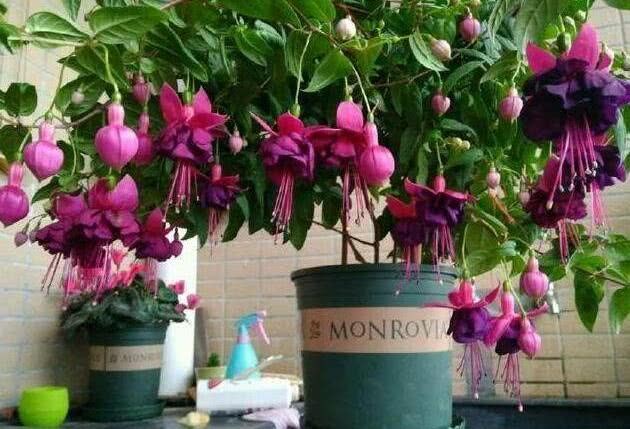
II. Fuchsia
Although fuchsia likes shade, it is not really possible for it to never see sunlight at all. Pay attention to shading in summer, and at other times it can appropriately receive good scattered light.
For usual watering, grasp the principle of watering when dry and letting it dry out between waterings. In spring when the weather is dry and in the hot, high-temperature summer season, you can spray water on the branches and leaves 1-2 times a day. Do not water too much and cause water to accumulate in the potting soil. In winter when room temperature is low, watering must be even more strictly controlled and fertilizing stopped, to prevent root rot. After each fertilizing and watering, loosen the soil in time to help with aeration.
It can be kept in the study, or hung on security grilles, corridors and other places for viewing
During the growing period, apply a dilute liquid fertilizer combining nitrogen and phosphorus once about every 10 days. If nutrition is insufficient, it will be very difficult for it to bloom again after flowering once.
III. Snake plant
The leaves can absorb water vapor from the air on their own, making it an ideal choice for the bathroom or shower room.
It should be kept in a shaded or semi-shaded place, to avoid its leaf color turning dull and whitish, which affects its ornamental value.
The snake plant likes warmth, and its suitable growing temperature is 20-30°C. Below 13°C it will stop growing, and in winter the care temperature for the snake plant must not be lower than 10°C, otherwise its roots will rot, causing the entire plant to die.
Under normal circumstances, the pot should be changed once every two years, in order to remove old roots and old leaves, replace some soil to increase the nutrients in the soil, and keep the whole pot of flowers fresh and attractive in appearance.
IV. Clivia
Although clivia is shade-tolerant, it is also not good for it to stay in a cool, lightless place for a long time. Besides paying attention to shading in summer, at other times it can be kept in a place with good scattered light. In spring, watering about once a week is enough.
The soil should not be too dry or too wet. Each watering must soak through, and after flower buds appear it should be watered a bit more. About every 20 days, in combination with watering, apply once fermented soybean cake water, diluted fishy water, and water from soaking water chestnuts, combining watering and fertilizing.
In spring, water once a week. Dig a hole along the edge of the pot, bury 2-3 cooked soybeans, and you can make the snake plant burst into a full pot!