How to grow orchids? Remember the five-lazy and three-diligent cultivation mantra
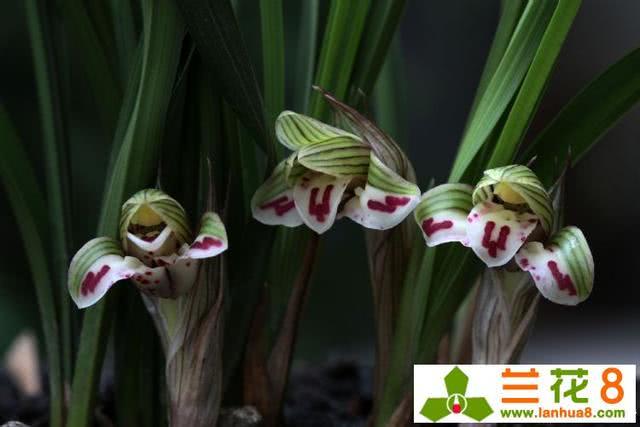
Many orchid growers have this feeling: only when growing becomes difficult do you truly understand orchids, and to grow orchids well you must know how to be lazy. In fact, there is a connection between orchid (lan) and lazy (lan), because their pinyin is exactly the same. (This is a digression.) However, in my humble opinion, to really grow orchids well, you truly need to understand the five lazinesses and three diligences in orchid growing.
1. Be lazy with watering. Many beginners see the surface of the orchid pot change color slightly and fear the orchid grass has lost water, so they cannot wait to water it. As a result, the potting medium stays too wet every day, so the small environment around the orchid roots is not ventilated and breathable, the orchid roots cannot get a fresh oxygen supply, and with the humidity being too high, the orchid roots easily rot. Think about it: if the orchid roots are not good, the orchid leaves certainly will not be good, and the orchid's life certainly will not last long. But some orchid growers also say they fear the orchid roots will be too dry and not grow well. In fact, there is no need to fear this. If growth is poor because it is too dry, it can still be remedied through later management; if the orchid roots rot because it is too wet, it is much harder to deal with. Therefore, when growing orchids, it is still better to be lazy with watering.
2. Be lazy with fertilizing. Some orchid growers fear that during the orchid's growth process the nutrients needed are insufficient, so they frequently fertilize the orchid. This may backfire. In fact, if you grow orchids with mountain humus soil, the nutrients contained in this potting medium are enough for one repotting cycle. There is no need to worry about insufficient nutrients. If you grow orchids with other potting media that have no nutrients, my personal view is: generally apply fertilizer once or twice around Qingming; during the plum rain period, if there are sunny days, also apply fertilizer 1--2 times; at Minor Heat, if you feel the orchid grass is not strong, apply a light fertilizer once; from White Dew to Autumn Equinox apply once more; after Cold Dew, if there are autumn shoots, apply a light fertilizer once more. That is enough. There is no need to fear insufficient nutrients. Generally speaking, when fertilizing, the concentration should be extremely dilute; better dilute than concentrated. Again, if nutrients are insufficient they can be added later, but if there is too much and fertilizer damage occurs, then it is still better to be a bit lazy.
3. Be lazy with repotting. Generally speaking, orchids should be repotted about every two years, because by then, after two years of growth, the nutrients in the pot are basically gone, the orchid plants have increased, the roots have also increased and become too dense, new roots have no room to spread, and empty shriveled old roots remain in the pot, occupying some space and possibly spreading disease. In that case, repot them. But some orchid growers, especially new orchid growers, lack confidence in their own orchid growing and want to see how the orchid roots are doing, so they repot from time to time. As a result, just as the orchid roots have adapted to the new environment, they are switched to another environment, which requires a certain period of settling in and affects the normal growth of the orchid grass. It is like a child who has just studied at one school for one semester and then has to transfer to another school; in that case, it is really hard to study well. Of course, if orchids develop disease, then it is necessary to dump the pot to protect the plants.
4. Be lazy about digging into the potting medium to look at bud sheaths. This exists among quite a number of orchid growers. In my personal view, when you dig open the potting medium to look at bud sheaths, it is easy to bruise the small buds, causing the small buds to become stunted or die. In fact, there is no need to be afraid. Even if the bud sheaths come a little later, as long as your grass is healthy and strong, buds will certainly come.
5. Be lazy about opening your wallet and be cautious when introducing varieties. In fact, whether online or in real life, everyone says a lot about this topic. But I still want to ramble one more sentence. When you use the hard-earned money you saved by skimping on food and clothing to exchange for a pile of diseased plants, fake plants, ordinary plants, or chicken-rib flowers that no one appreciates, are you really being worthy of the RMB you spent? Therefore, when introducing varieties, you must open your eyes wide, choose the right seller, and be lazy about opening your wallet. Do not buy a photo and give yourself a dream. With money, you will eventually be able to buy the real thing, but if you buy fake or diseased ones, then you can only cry bitterly at them (unable to laugh)!
Now let us talk about the three diligences!!
1. Be diligent with ventilation. This seems to be mentioned quite often. In short, the orchid room environment must be ventilated, and the orchid pot's potting medium must not only retain moisture well but also be well ventilated, because orchid roots are semi-epiphytic. Only orchid grass with good ventilation conditions can possibly grow well and grow strong.
2. Be diligent with observation. Observe the growth of the orchid grass more, discover signs of disease in time, handle them promptly, and keep abnormal plant loss to a minimum.
3. Be diligent with communication. Learn more. This point is very important, because you alone cannot possibly fully understand orchids. Therefore, participate more in orchid exhibitions. Communicate more with local orchid growers and keep in contact with online orchid growers at all times. Ask for advice on orchid growing techniques, learn appreciation knowledge, and become familiar with market conditions. Use others' strengths to make up for your own shortcomings, so that you can comprehensively improve in cultivation, appreciation, and disease prevention and control. I publish orchid knowledge and pictures every day, taking you to understand orchids in depth and teaching you to grow orchids easily. If there is anything you do not understand about orchids, you can ask me at any time or leave a message below. If my knowledge has helped you, I hope you can give me a like or repost it to help more people!