Report in, everyone. Up ahead I spotted a nice butt.
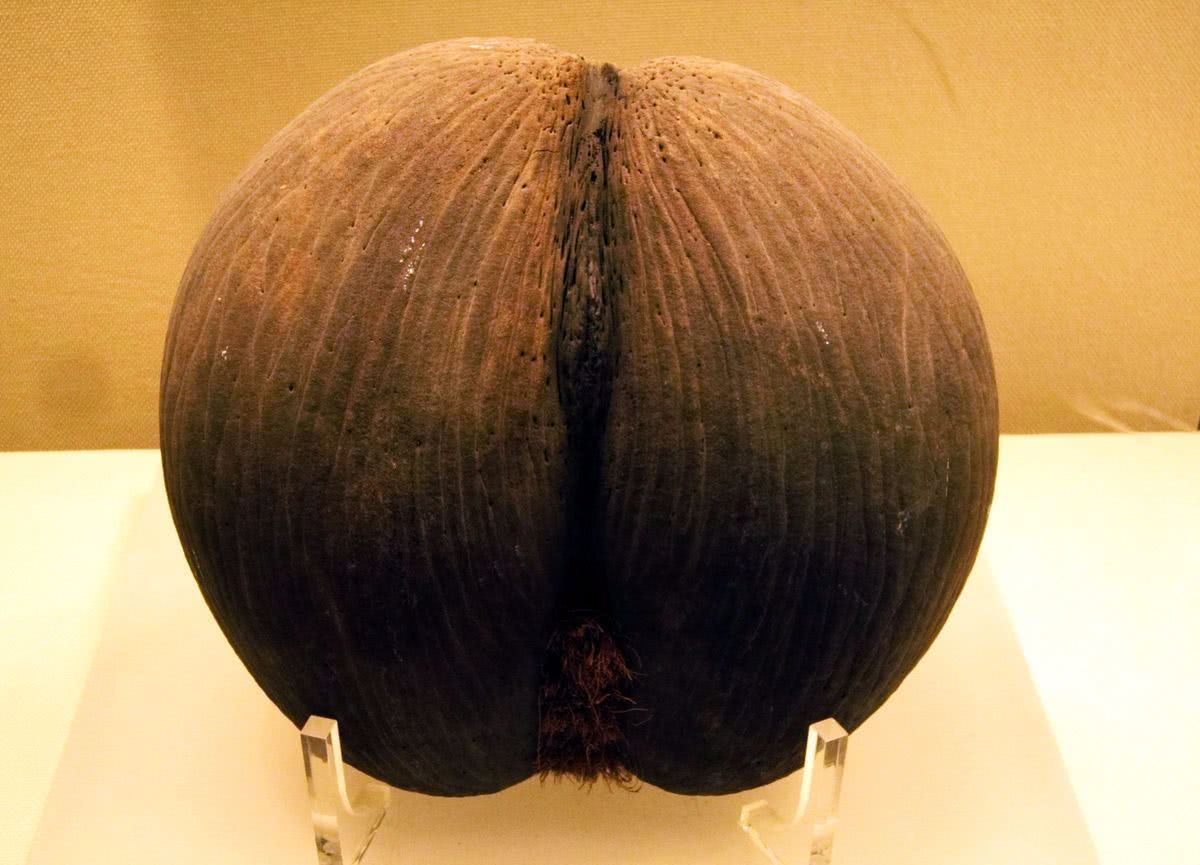
Today I'm talking about an interesting plant, known as the "fruit of the sea plant" - the sea coconut. It has another name too; anyone who sees what this fruit looks like should be able to guess it, because its appearance closely resembles a human buttocks, so in the early days, the botanical scientific name of the sea coconut was lodoiceacallipyge, and callipyge means "nice butt."
Alright, back to the point. Although its name is sea coconut, it does not come from the sea floor; it is a palm family plant. So why is it called sea coconut? Actually, before the Seychelles Islands were discovered, some people in Southeast Asia picked up this kind of coconut by the seaside, found that it was not similar to the local coconuts, and thought it was the fruit of a plant from the sea floor, so they called it sea coconut.
But in fact, the sea coconut does not spread through water currents, because only the already rotted ones will float on the water surface and drift, so the sea coconut only exists on a few islands in the Seychelles. That brings us to the classification of the sea coconut: there is the African sea coconut and the Thai sea coconut, and the only one available for purchase on the market is the not-so-precious Thai sea coconut.
And what we are talking about is precisely the African sea coconut. Why can't it be bought? Because it is the national treasure of the Republic of Seychelles, its output is very limited, and the existing sea coconut trees are already protected by the local government of Seychelles, and export is prohibited; it can only be used locally for viewing or decoration.