A tree in the south: people don't eat the fruit but eat the roots; it is extremely toxic, yet its taste rivals sweet potato
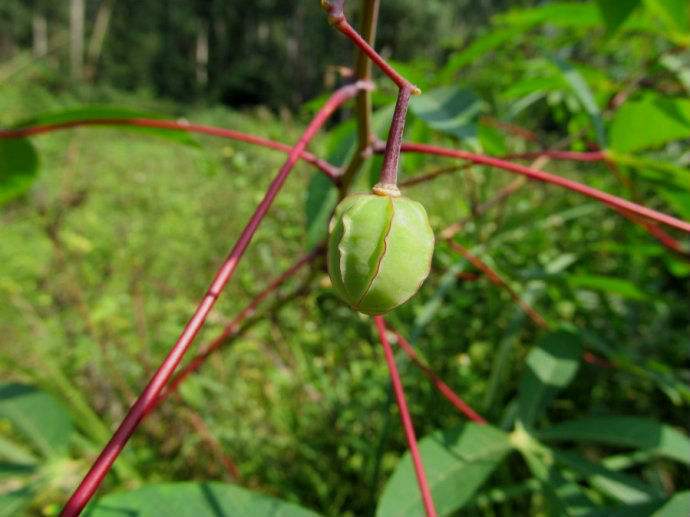
In the southern regions of China, there is a low-growing tree. It looks quite ordinary and can bloom and bear fruit, but people do not eat its fruit; instead, they eat its roots, which leaves outsiders baffled. This tree is called "shushu" or "nanyang shu" locally, and it is a crop introduced from the Americas. Its characteristic is that its roots are numerous and large, just like an enlarged sweet potato, which is why it is called "shushu" (tree potato). Shushu is edible, and its taste rivals sweet potato, but it is extremely toxic and must never be eaten raw.
The scientific name of shushu is "cassava" (Manihot esculenta). Together with sweet potato and potato, it is known as one of the "three major tuber crops of the world." It is an important food crop in developing countries in tropical regions, and low-income people in some African countries rely on cassava as their staple food. In China, cassava is grown relatively widely in Guangdong, Guangxi and Hainan. In the past era of food scarcity, it was once an important food source; today it is mainly used to process cassava flour and animal feed. In rural China, cassava is also eaten as a coarse grain food, and eating it occasionally is good for the body, but you must be careful: it needs to be detoxified first before it can be eaten.
The detoxification process for cassava is rather cumbersome, because its toxin is a neurotoxin. Simply boiling it is not enough to fully remove the toxin. You need to remove the outer skin, then soak it under running water for about a week before it can be cooked. Because this toxin is water-soluble, soaking it under flowing water is best, and the water after soaking is also toxic and cannot be used. After being rinsed under running water, the vast majority of the cassava's toxin is removed, and then it can be steamed, boiled or fried. After high-temperature cooking, it can be eaten safely.
The main component of cassava is starch. Especially dried cassava, its starch content reaches as high as 80%, making it an excellent material for processing cassava flour. Although fresh cassava is highly toxic, cassava flour that has gone through a series of processing steps is a very safe starch and is often used in people's daily lives. For example, using cassava flour to thicken sauces gives a transparent and thick consistency with no off-flavor, and the dishes come out bright and attractive in color, even better than cornstarch.
However, although cassava is edible, it is very filling and also fairly high in crude fiber, so be careful not to eat too much. Dear readers, have you ever eaten cassava?