What are the cultivation methods and precautions for the colorful dragon tree?
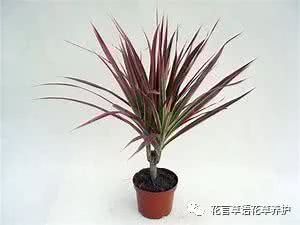
The colorful dragon tree has a charming appearance and is favored by interior designers for its ability to adapt to dim and dry office environments. With just a little care, it can grow for a long time and bring high-quality air.
Morphological characteristics
The colorful dragon tree has a small and upright trunk. The main trunk is generally about 1 cm, with tight nodes. The leaves are also narrow and slender like swords. The leaves are 30-40 cm long and less than 1 cm wide, swaying gently when a breeze passes by.
What attracts people most is mainly the colorful leaf surface. On the slender and long leaf surface, the tricolor dragon tree presents red, yellow, and green, with clear vertical stripes composing the leaf surface; the rainbow dragon tree has even more perfect colors, with clear yet orderly white, milky white, yellow, cream yellow, bright red, pink, dark green, and light green on the leaf surface, forming long striped leaves in multiple colors. It can truly be described as brightly colored and colorful, and it indeed has its unique appeal. Comparatively speaking, the leaves of the tricolor dragon tree are slightly wider than those of the rainbow dragon tree.
Growing environment
The colorful dragon tree likes high temperatures and humidity, and likes light. With sufficient light, the leaf colors are vivid. It is not cold-tolerant. The winter temperature is about 15°C, and the minimum temperature is 5-10°C. If the temperature is too low, because the root system cannot absorb enough water, yellow-brown patches will appear on the leaf tips and leaf edges. It likes loose, well-drained soil rich in humus.
Cultivation and care
A substrate mixed with 1 part each of leaf mold, peat soil, and river sand can be used, and it can be cultivated under 70-80% shading. During the growing season, apply compound fertilizer 1-2 times a month, and keep the soil moist. In summer, spray the leaves more to increase air humidity. The leaves will be thicker, the leaf color brighter, and the leaf tips less likely to dry out. In winter, protect it from the cold and keep it above 8°C. Reduce watering of the pot soil, but frequently wetting the floor to increase humidity helps maintain leaf color and prevent dry tips.
Plants of this genus have graceful leaf shapes and are good materials for various indoor arrangements. Before bringing them indoors, appropriately lower the humidity so they adapt to a drier environment. After bringing them indoors, frequently spray water on the leaves, and they can be enjoyed indoors for a long time, with leaf tips not easily drying out.