How to grow sweet potatoes in pots? Learn to grow delicious and healthy sweet potatoes at home in containers
Every time I see someone selling roasted sweet potatoes on the street, I can't help but buy one or two to enjoy at home with my family; the sweet, fragrant taste is truly wonderful. Instead of always buying them outside, why not grow a few pots yourself at home? Roasting them yourself at home is surely healthier.
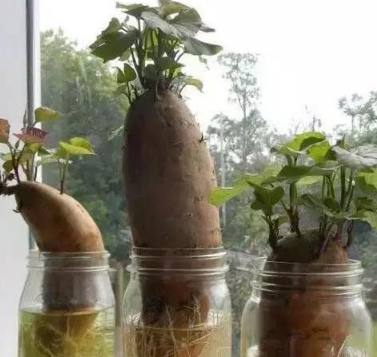
We can grow sweet potato plants in glass jars; don't they look quite presentable? The sweet potatoes at home have just been harvested not long ago, so now is exactly the right time to make sweet potato pot plants.
In more southern regions, sweet potatoes planted in the ground can be harvested in 4 to 5 months. If you grow them in the northern climate, pay attention to cold protection and warmth, and you can plant them on the balcony, growing them specifically for the leaves; the tender leaves taste quite good.
Sweet potato propagation:
Actually, sweet potatoes are propagated from vines, not from tubers; a sweet potato seedling with 2 to 3 nodes can grow. Be careful not to put too many stems in one pot, or there will be no room for them to grow.
When choosing fresh sweet potato stems at the market, specifically pick old stems; old stems don't taste good for eating, but they are excellent for propagation.
Planting key points
For planting in pots, it is best to use a pot with a diameter of more than 30 cm. First lay small pebbles at the bottom of the pot, then add a layer of loose soil, then add some decomposed organic fertilizer. With this bit of organic fertilizer as a base fertilizer, you basically won't need to fertilize much afterward.
Sprinkle another layer of soil and you can put the stems in. When first planting, remove all the leaves. After planting the old stems, keep the soil slightly moist, not too wet; they will sprout quickly, and the leaves that grow out are all very tender.
Care notes
In just a few weeks, these seedlings grow very lush. At this point you can place them on a windowsill or balcony to give them plenty of light, and set up a support for them to climb and grow.
If you cultivate them now, the northern climate probably won't allow them to sprout, but you can grow them indoors; cover them with a bag and leave several holes in the bag, and you can still successfully grow new pot plants.
Placement location
Sweet potato pot plants should be placed in a sunny, warm spot. It is best to leave some space for their vines to hang down or climb, and note that the potting soil must not become waterlogged.
Soil selection
If you want to grow sweet potatoes well and also want to harvest large sweet potatoes, then you must use loose, slightly acidic sandy soil. Growing sweet potatoes in this kind of soil basically brings no worries, because it has good drainage and the soil is loose, making it very easy for them to grow.
You can mix leaf mold, garden soil and river sand; this kind of soil is best for growing sweet potatoes.
Watering and fertilizing
At the beginning of planting, keep the soil moist, then place it in a shaded, ventilated spot for 3 to 5 days. After it sprouts and grows leaves, start giving it light.
After that, wait until the soil is slightly dry before watering. When fertilizing, also be careful not to use compound fertilizer with high nitrogen content; it is best to use decomposed organic fertilizer, which is natural and healthy.
For hydroponic ones, you can add a few drops of nutrient solution each week, and change the water if it becomes too cloudy. If the tuber rots, cut it off promptly, wash it and soak it in potassium permanganate solution, then let the wound dry before putting it back in water.
Harvest:
If it is a tuber sweet potato grown hydroponically, then it can remain an ornamental pot plant the whole time. If it grows lush enough, its tender leaves can also be eaten.
The growing period for soil-grown ones is 4 to 8 months, and by then you can harvest more sweet potatoes. Whether grown from tubers or from sweet potato vine cuttings, you can get more sweet potatoes.
Just store sweet potato tubers in a cool, dry place; their skins will harden after two weeks. If stored in a cool, damp place, they will all sprout, and then there will be nothing left to eat.