These 9 exotic flowers and rare plants, I really want to move them into pots at home; people say the last one lived in vain
These 9 exotic flowers and rare plants, I really want to move them into pots at home; nature was too cruel to the last one!
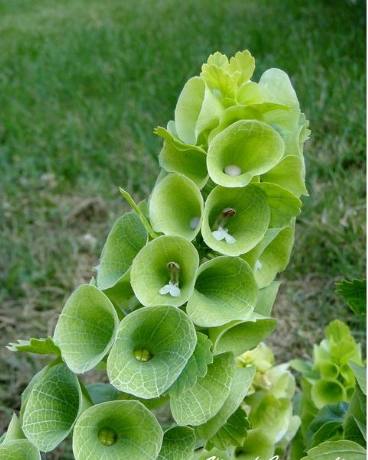
1. Shell flower
The shell flower has a strange flower shape, small opposite leaves, and white flowers shaped like shells. It is simple, elegant, and beautiful, often used as a filler flower in flower arrangements, and can also be used as dried flowers and for potted display. After drying it turns white, making it a great material for dried and fresh flowers. Each pot of shell flower can absorb 150g of carbon dioxide and release 56g of oxygen per year, making it a very green and eco-friendly plant.
2. Blood lily (Scadoxus)
Distributed in Africa, from southeastern South Sudan to South Africa. It has a huge bulb. The leaves show varying degrees of wavy twisting depending on the environment of different origins; among them, individuals from around East London in southeastern South Africa even have leaves with no twisting or wavy form at all.
3. Ipomoea bolusiana
Ipomoea bolusiana is the Chinese name for Ipomoea bolusiana; it belongs to the Convolvulaceae family. When the flower has not bloomed, it looks like a block-shaped plant, and only when the flowering season arrives do people realize that it is very similar to morning glory. Because of the graceful posture of Ipomoea bolusiana, many people like to grow a pot of it at home or in the office, and the effect is also very good.
4. Monkey tail cactus
The monkey tail cactus has a peculiar plant shape; its slender white-haired stems closely resemble a monkey's tail, making it an ideal hanging potted plant.
5. Gentianella ecuadoriana
A plant in the Gentianaceae family, genus Gentianella, Gentianella ecuadoriana is endemic to Ecuador. Its natural habitat is tropical or subtropical high-altitude scrub, or high-altitude grassland. Its flowers look like little hot air balloons, very beautiful.
6. Medusa's orchid (Habenaria medusa)
The strangest thing about this flower is that its lip is divided into snake-like strands of fringe, just like Medusa's hair. Perhaps it is precisely because it looks like Medusa that it is called Medusa's orchid.
7. Wine cup flower (Geissorhiza radians)
The wine cup flower grows on sandy slopes and exposed granite ground. It belongs to the small-bulb group, and its colors contrast strongly. It is a representative variety of South African wine cup flowers. To get the wine cup flower to bloom, there must be enough sunlight, even full sun, so that the petals will fully open, and it is best if the flower petals do not touch water, otherwise they will rot. Likewise, watering should wait until the soil is completely dry.
8. Desert five-spot (Eremalche rotundifolia)
The desert five-spot usually has flowers that close into a ball shape with only a small opening, and there are also states where they close completely into a ball, like little pink bubbles, very cute. When not closed, the petals have five spots, which is also very beautiful.
9. Puya raimondii (Luther's Puya)
Known as the "Queen of the Andes," Puya raimondii is one of the oldest plants in the world. This strange plant blooms a few weeks before it dies. Even before blooming, this Queen of the Andes plant, which can reach 40 feet tall, is full of imperial presence, towering majestically among the mountains of Peru and Bolivia. Puya raimondii can live to eighty years, even over a hundred years, but it only blooms and sets seed before its life ends. This once-in-a-lifetime chance to reproduce is very rare, and what is even more cruel is that, in the harsh mountain environment, in the end not many seeds can germinate. In a botanical sense, it has lived in vain.